Living in Back Bay: The Essential Guide for Young Professionals
Explore Back Bay’s busy 100/100 walkable vibe: brownstone condos, $3,436 median rent, Green/Orange Line access, Newbury, Copley & Esplanade.
Written ByAndrew Schwartz
PublishedSeptember 9, 2026
We're SmartHub Boston, a data-driven brokerage led by Andrew Schwartz serving buyers, sellers, investors and landlords across Boston, Cambridge, Newton and Brookline. Serving Boston, Newton, Brookline, Cambridge, Somerville, Watertown, Natick, Wellesley and Weston, MA.
# Living in Back Bay: The Ultimate Neighborhood Guide for Young Professionals
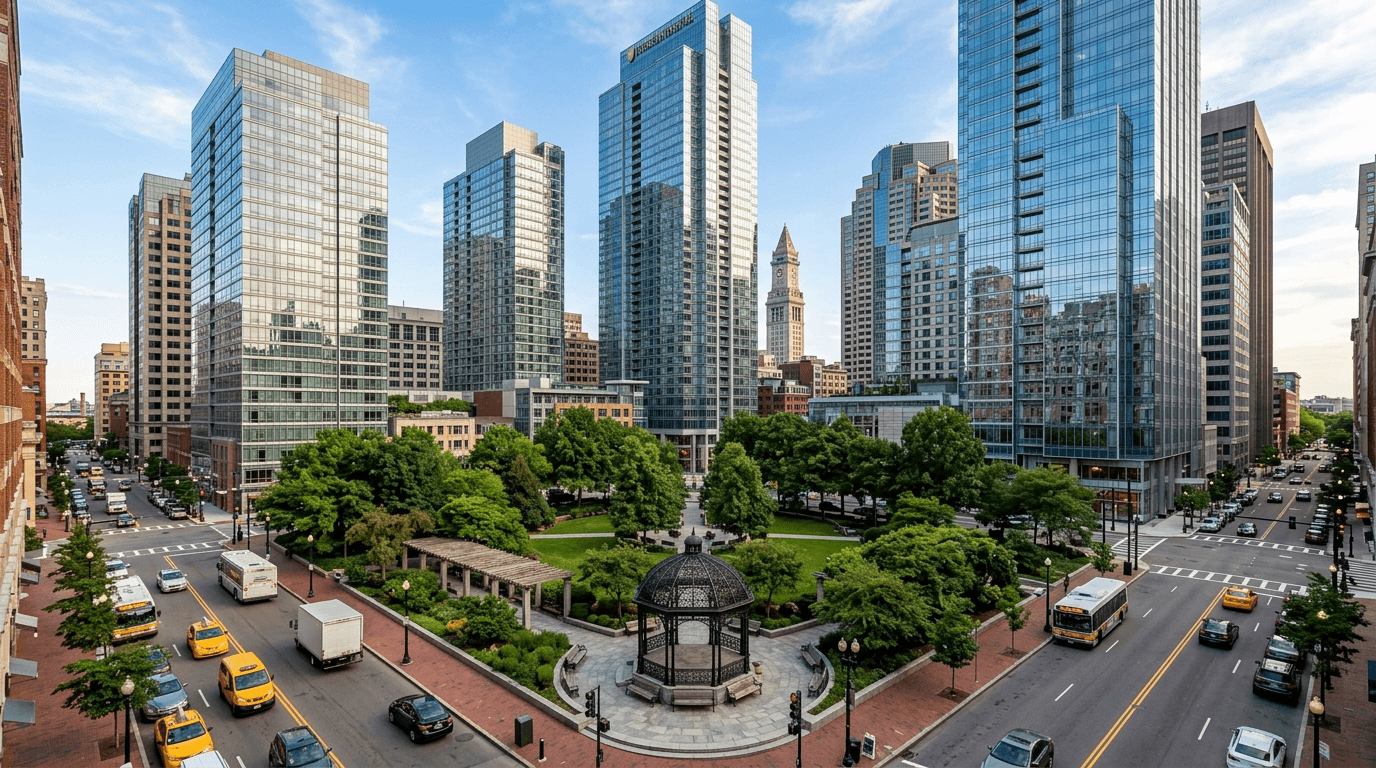
Back Bay comes closer than any other Boston neighborhood to doing everything at once. Nineteenth-century brownstone streetscapes. A Green Line stop every few blocks. World-class shopping outside your door, and the Charles River Esplanade serving as a de facto backyard. For young professionals figuring out where to plant a flag in this city, it's usually the first neighborhood on the list — and the one every other neighborhood gets measured against.
Here's what you should actually understand before you sign a lease or write an offer.
What Is the Vibe Like in Back Bay — Is It Quiet or Busy?
Back Bay is decidedly busy. It scores a perfect 100/100 for vibrancy, nightlife, restaurants, and shopping — and a mere 20/100 for quiet. If stillness is what you're after, look elsewhere. If you want to step outside at 8pm on a Tuesday and find the sidewalks full, you've found your place.
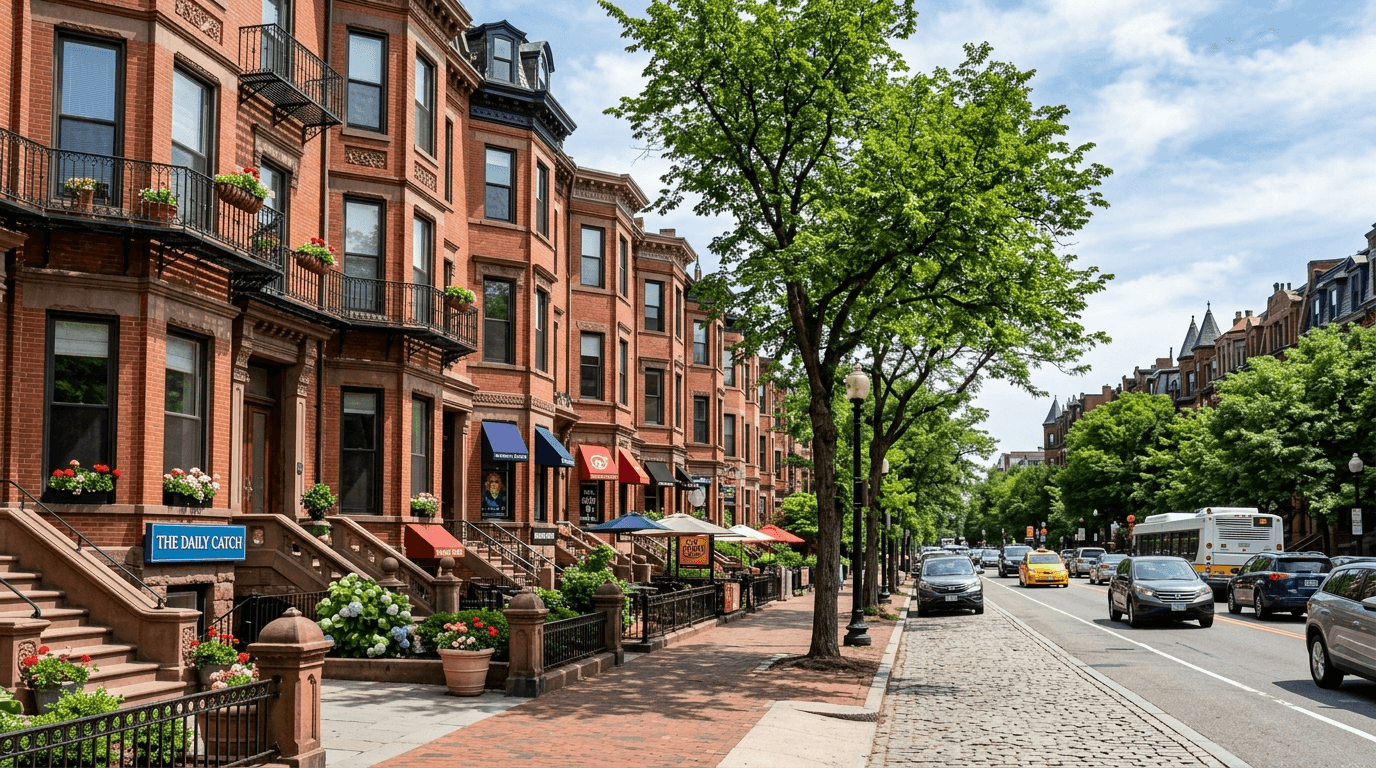
That energy isn't evenly distributed, though, and it's the detail most people don't register until they've spent a few weekends here. Boylston and Newbury Streets run hot: retail, patio dining, tourists, constant foot traffic. Newbury Street's pedestrian volume has grown noticeably in recent years, and storefront vacancy along Back Bay's commercial corridors is very low — which tells you plenty about how alive those blocks are.
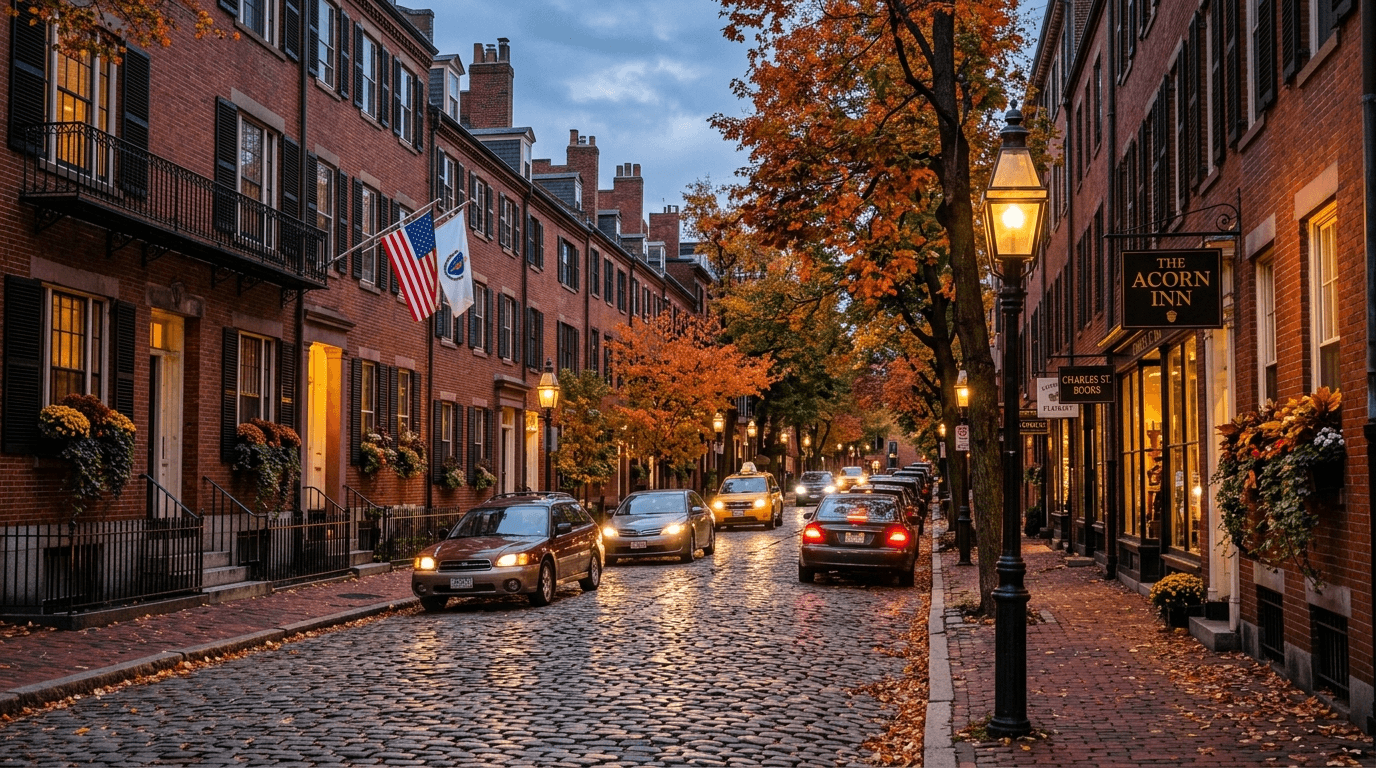
Walk two blocks north and the temperature drops. Marlborough Street and Beacon Street are genuinely residential: tree-lined, gas-lamped, quiet enough that you hear your own footsteps. Commonwealth Avenue Mall splits the difference — a linear green promenade that works as the neighborhood's shared front yard.
Urban Lifestyle Scores: Amenities vs. Quiet
The neighborhood delivers maximum scores for dining, shopping, parks, wellness, nightlife, and vibrancy—but the low quiet score reinforces its bustling, city-center feel.
Groceries100/100
Restaurants100/100
Cafes100/100
Shopping100/100
Parks100/100
Wellness100/100
Vibrancy100/100
Nightlife100/100
Quiet Score20/100
The neighborhood delivers maximum scores for dining, shopping, parks, wellness, nightlife, and vibrancy—but the low quiet score reinforces its bustling, city-center feel.
The demographics reinforce all of it. Average age is 39, roughly 85% of residents hold a college degree, and average household earnings land around $164K. Consultants, attorneys, physicians, finance professionals, and grad students who never left — people who work long hours and want their off-hours to be frictionless.
Who thrives here: anyone who values time over square footage. If your ideal Saturday is a Barry's class, a coffee on Newbury, and a run along the Esplanade before dinner, Back Bay compresses all of that into a 15-minute radius.
Who struggles here: anyone who needs a car for daily life, anyone who wants a yard, and anyone who'd be irritated by tourists photographing Trinity Church on their block every weekend from May through October.
What Are Condos and Townhomes Like in Back Bay?
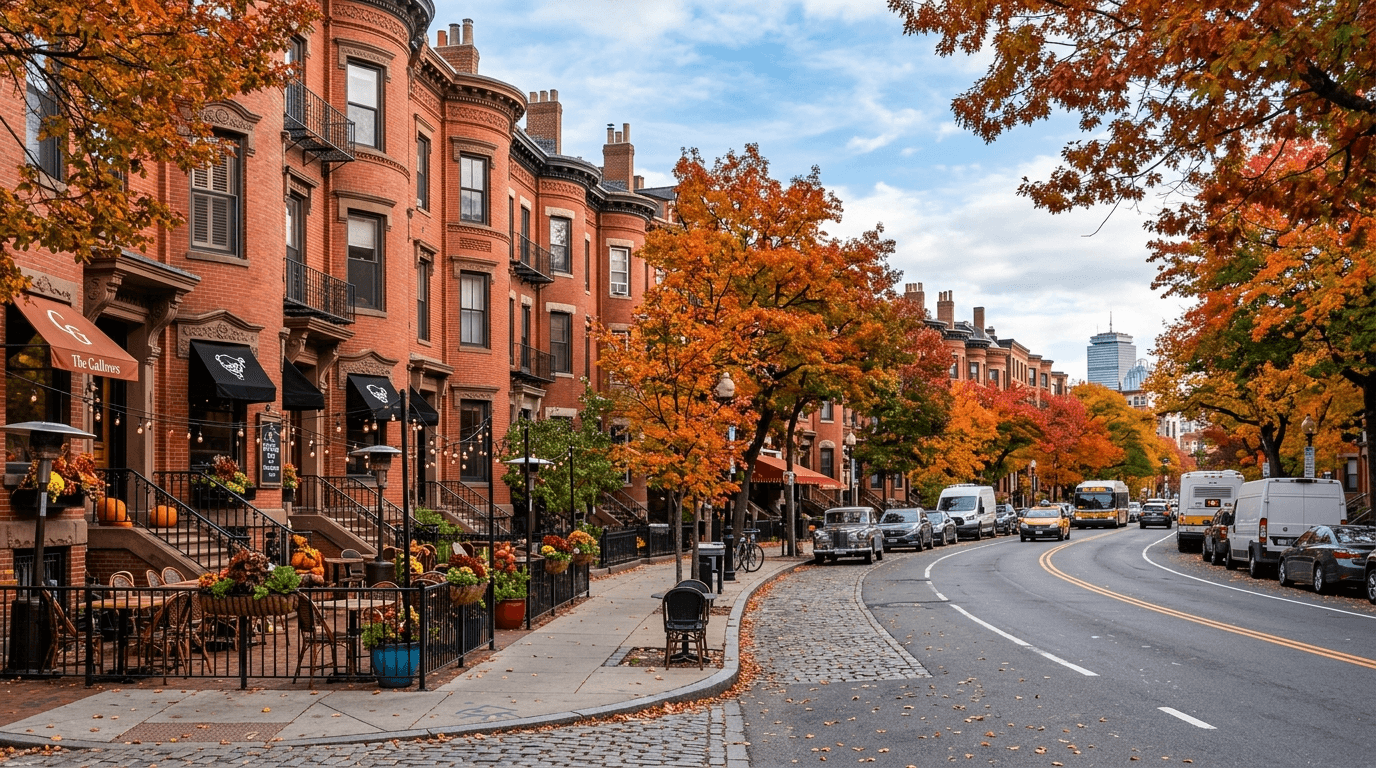
Back Bay is a brownstone neighborhood with a luxury high-rise overlay. The dominant housing type is the Victorian brownstone townhome — most of them long since carved into two to eight condominium units — supplemented by full-service towers along the Boylston/Stuart/Dalton corridor.
What Are Back Bay's Brownstone Condos Actually Like?
Back Bay was built on filled tidal land over a compressed period in the mid-to-late 1800s, which explains why the architecture is so remarkably consistent. Victorian, Italianate, and Queen Anne facades, row after row, on narrow lots — typically 20 to 25 feet wide and running deep. The Back Bay Architectural Commission meets monthly and governs exterior changes, so those facades stay intact.
What that means in practice for a buyer:
•Layouts are vertical and quirky. A "two-bedroom" in a brownstone conversion might be a parlor-level floor-through with 11-foot ceilings, or a garden-level unit with lower ceilings, less light, and a meaningfully lower price.
•Parking is a separate asset. Deeded parking in Back Bay is scarce and priced accordingly. Assume you don't have it unless the listing explicitly says you do.
•Outdoor space is a premium. A private roof deck or a patio off a garden unit commands a real premium over an identical unit without one.
•Elevators are the exception. Many conversions are walk-ups. A fourth-floor unit is a different lifestyle than a second-floor unit.
What Do Back Bay's Full-Service Towers Offer?
At the other end of the spectrum, full-service buildings like The Clarendon at 400 Stuart Street and One Dalton (the Four Seasons Residences) deliver concierge, valet, fitness, and skyline views. New inventory keeps arriving. Raffles Boston added branded residences alongside its hotel rooms, and the Lyrik development is building out retail and residential over the Massachusetts Turnpike.
What Does It Cost to Buy in Back Bay?
Back Bay is expensive, and the median numbers are noisy because the neighborhood contains everything from small studios to trophy townhouses. As of August 2026, the median listing price sat at $2,200,000 while the median sold price came in around $1,275,000. That gap is the tell: the high end lists aspirationally, while the transactions cluster lower.
Back Bay 2026 Market Snapshot
Headline housing metrics for Back Bay show a high-cost, high-activity urban market: $2.2M median list price, 199 active listings, 481 rentals, and a 98% sale-to-list ratio.
Sub-market variance matters more than the neighborhood-wide median. Back Bay East — the Arlington-to-Dartmouth stretch, closest to the Public Garden — carries the highest medians. Back Bay West runs meaningfully lower. The Prudential–St. Botolph pocket sits between the two. Same neighborhood, very different entry points.
What Do HOA Fees Typically Look Like in Back Bay Condos?
This is the line item that catches first-time Back Bay buyers off guard, and it's the single biggest reason two units with identical list prices can carry wildly different monthly costs.
The range starts with small self-managed brownstone associations, where monthly fees can run a couple hundred dollars, moves up through larger brownstone conversions in the mid-hundreds, and climbs into the thousands at full-service towers. At the very top — One Dalton, St. Regis — full amenity programs carry the highest fees in the city.
Neither model is "better." A very low fee at a small self-managed brownstone means you and five neighbors are the reserve fund, and a roof or facade project can trigger a special assessment. A four-figure fee at a tower buys a professional management company, on-site staff, and a funded capital plan. Underwrite both honestly.
One practical note if you're financing: lenders will want the condo questionnaire, and turnaround varies. High-rise management companies with professional staff generally return them quickly; small volunteer brownstone boards can take considerably longer. Lenders also scrutinize owner-occupancy ratios and the share of commercial square footage in a building. Small associations with a lot of investor-owned units can complicate a conventional loan, so build that timeline into your offer.
What About Renting in Back Bay?
Most young professionals start as renters here, and the math is straightforward. Rents scale sharply with bedroom count, which is exactly why so many Back Bay leases are two- and three-bedroom shares.
Average Rent by Unit Size in Back Bay
For young professionals weighing roommates versus solo living, rents scale sharply from studios to three-bedrooms in the 2026 Back Bay rental market.
For young professionals weighing roommates versus solo living, rents scale sharply from studios to three-bedrooms in the 2026 Back Bay rental market.
Median rent sits around $3,436 a month, and the unit-by-unit averages above show how fast that number moves once bedrooms are added — a studio average well under the median, a three-bedroom average far above it. Vacancy is extremely tight, though availability has loosened somewhat year over year.
One meaningful shift for renters in 2026: broker fee structures changed dramatically. A year ago, the overwhelming majority of Back Bay listings were no-fee to the tenant. Today that share is closer to half, with a substantial slice of inventory carrying a full fee. Budget accordingly. On a one-bedroom near the neighborhood average, a full fee is roughly an extra month's rent at signing.
Where Do People Actually Gather in Back Bay?
Copley Square is the civic heart, Newbury Street is the social spine, and the Esplanade is the release valve. Those three anchor nearly everything.
Why Is Copley Square the Center of Back Bay?
Copley Square Park is where Back Bay assembles — for the farmers market, for the Marathon finish, for the simple act of sitting outside with a coffee. It's bounded by Trinity Church and the Boston Public Library, and the BPL's interior Courtyard is one of the neighborhood's genuinely underrated assets: a quiet, colonnaded space that doubles as a free co-working spot for anyone with a laptop and a library card. If you're remote or hybrid, this alone justifies a Back Bay address.
What Is Newbury Street Like for Back Bay Residents?
Eight blocks running from the Public Garden to Massachusetts Avenue, stepping down in price and formality as you head west. Flagship retail at the Arlington end; independent boutiques, salons, and cafes toward Mass Ave. Patio season, roughly April through October, turns the entire street into an outdoor dining room.
What Do Boylston Street and the Prudential Center Mean for Back Bay Daily Life?
Boylston is the working artery: gyms, grocery, banks, fast-casual lunch, plus the Prudential Center and Copley Place mall complex, connected by skybridge and worth their weight in February when you'd rather not step outside. The Pru is also a genuine employment hub, so plenty of residents measure their commute in minutes.
How Do Back Bay Residents Use the Charles River Esplanade?
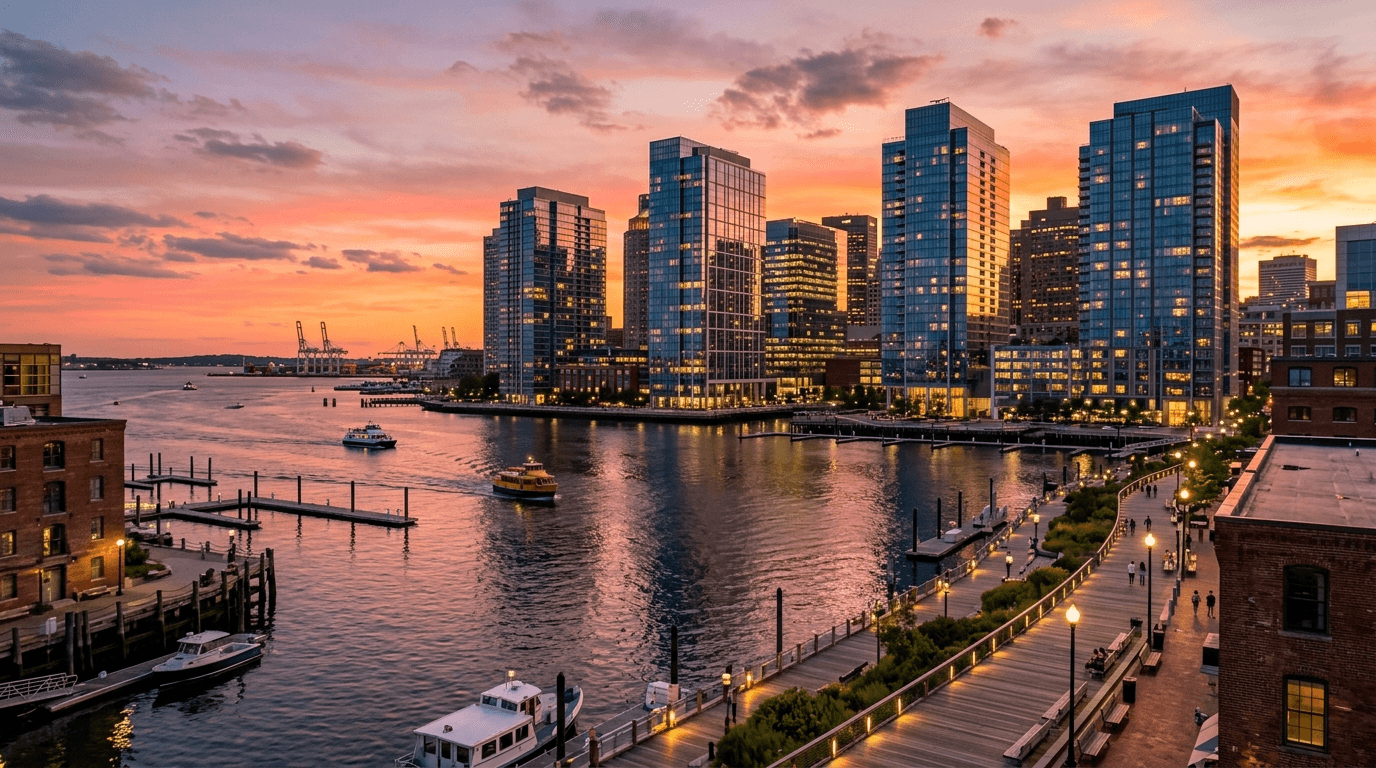
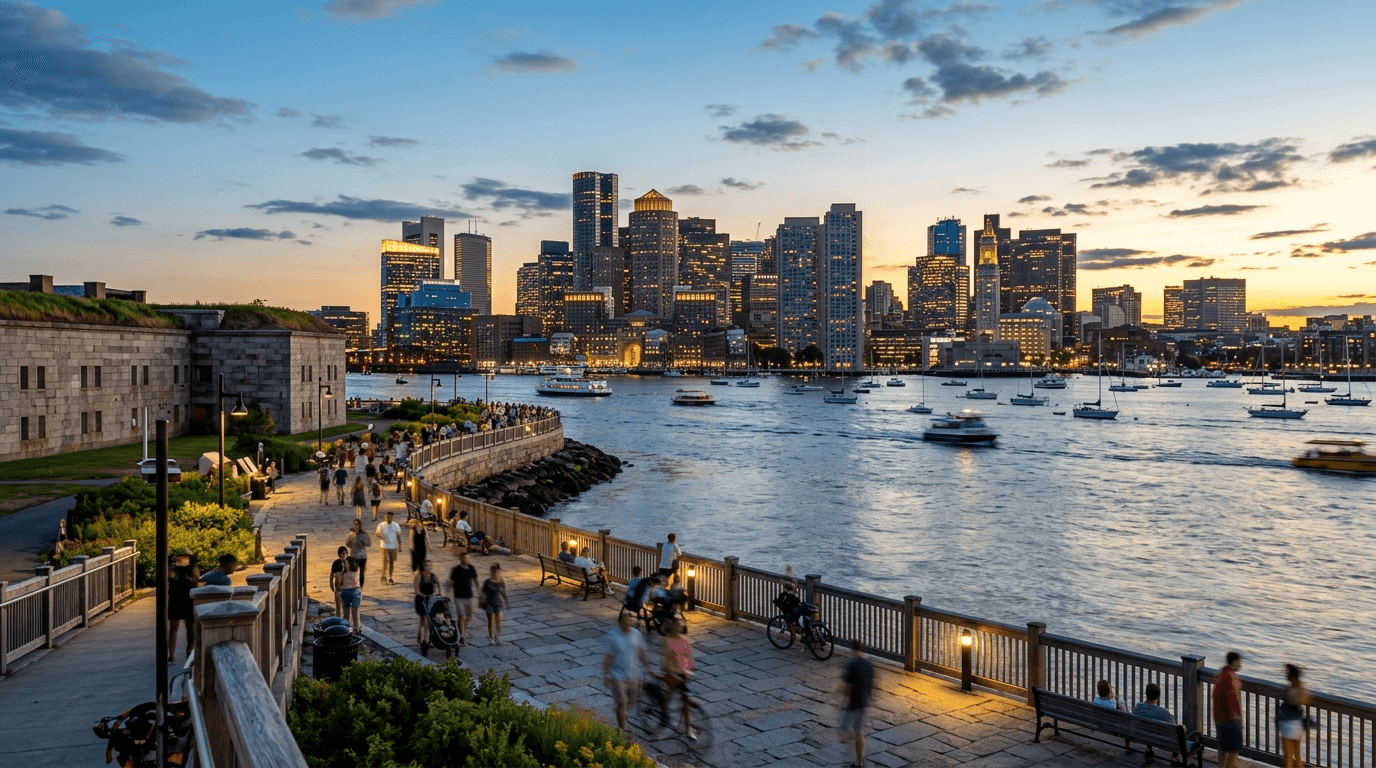
It's the neighborhood's outdoor room. Running paths, sailing, the Hatch Shell, and enough green to compensate for Back Bay's thin street-level tree canopy. Access comes via footbridges over Storrow Drive — the Fiedler and Arthur Fiedler footbridges near Arlington and Dartmouth are the main ones.
Where Do Back Bay Residents Work Out?
Worth its own section, because it drives so much of the daily rhythm here. Back Bay scores 100/100 for wellness amenities, and the boutique fitness density is real: Barry's Back Bay , Healthworks, and a dozen studio operators within walking distance. A large share of the young professionals I work with in this neighborhood build their mornings around a 6am class and a walk to the office afterward.
How Is the Commute From Back Bay to Downtown Boston or Cambridge?
It's one of the best-connected residential neighborhoods in New England. Back Bay scores 100/100 for both walkability and transit — and 50/100 for drivability, which is the honest trade-off.
Mobility Scores: Built for Car-Light Living
Back Bay’s strongest lifestyle advantage for urban professionals is mobility: perfect walkability and transit scores, strong bikeability, and comparatively weaker drivability.
Walkability100/100
Transit100/100
Drivability50/100
Bikeability70/100
Back Bay’s strongest lifestyle advantage for urban professionals is mobility: perfect walkability and transit scores, strong bikeability, and comparatively weaker drivability.
Three stops serve the neighborhood directly, all along the Boylston Street corridor:
•Arlington — eastern edge, at the Public Garden. Closest to Beacon Hill and the Theater District.
•Copley — dead center, at Copley Square. The default stop for most of Back Bay.
•Hynes Convention Center — western edge, near Mass Ave. Also the closest stop to Fenway and Kenmore.
All three feed downtown via Park Street and Government Center, putting the Financial District a short ride away. For Cambridge, the Green Line connects at Park Street to the Red Line for Kendall/MIT and Harvard — a very manageable one-transfer trip.
What Does Back Bay Station Connect You To?
Back Bay Station on Dartmouth Street is the neighborhood's heavy-rail hub, and a serious asset:
•Orange Line — direct to Downtown Crossing, State Street, and North Station, plus southbound toward Jamaica Plain and Forest Hills.
•Commuter Rail — the Framingham/Worcester, Providence/Stoughton, and Franklin lines all stop here. If your firm has an office in Providence or Worcester, or your partner works out toward Framingham, this changes the calculus entirely.
•Amtrak — Northeast Regional and Acela. Boarding a train to New York or Washington five minutes from your front door is a legitimate lifestyle upgrade for anyone who travels for work.
Can You Walk or Bike Everywhere From Back Bay?
Walkability is the real headline. The Financial District is a walk, not a commute. The South End, Beacon Hill, and Fenway are all reachable on foot. Bikeability scores 70/100, and the infrastructure keeps improving — the Boylston Street Better Bike and Bus Lane project, part of the city's Go Boston 2030 initiative, is aimed squarely at making that corridor work better for buses and bikes.
Boylston Street Better Bike and Bus Lane
A mobility initiative tied to Go Boston 2030, focused on improving bus, bike, and street performance along one of Back Bay’s key urban corridors.
Project NameBoylston Street Better Bike and Bus Lane
Drivability at 50/100 isn't a knock on the neighborhood. It's a statement about physics. The grid is orderly but the streets are narrow, Storrow Drive and the Mass Pike bracket it with real congestion, and a resident parking permit doesn't guarantee you a space. Deeded parking spots trade at prices that shock people from other markets.
My honest read: if you're moving to Back Bay and you drive your car less than twice a week, sell it or garage it outside the city. This neighborhood is engineered for car-light living, and you'll spend the savings on a nicer apartment.
Is Back Bay Worth It for a Young Professional?
Yes — if you're buying the location and the lifestyle, not the square footage.
The honest trade-off is space. You'll get more room for your money in the South End, Fenway–Kenmore, Brighton, or across the river in Cambridge and Somerville. That's simply true, and any local will tell you the same. Boston's overall cost of living runs well above the national average, and Back Bay sits at the upper end of the city.
What you're buying instead:
•Zero commute friction. Three Green Line stops, the Orange Line, Commuter Rail, and Amtrak, all within walking distance.
•A neighborhood that holds value. Historic district protections cap new supply. There's a finite number of Back Bay brownstones and no mechanism to build more.
•Everything within a 15-minute walk. Groceries, gyms, dining, parks, and one of the best public libraries in the country.
If you're weighing a purchase here, one piece of advice matters more than the rest: run your numbers on total monthly carry, not list price. A $1.4M unit with a low brownstone fee and a $1.4M unit with a four-figure tower fee are not the same purchase, and a difference of well over a thousand dollars a month adds up to real money over a five-year hold. Get the association's reserve study and recent meeting minutes before you commit — especially in a small self-managed building, where a facade or roof project can land as a special assessment.
And if you're renting first, which most people should for at least a year, pay attention to the sub-market. A one-bedroom off Mass Ave in Back Bay West lives very differently from one off Arlington in Back Bay East, and the price difference reflects it.
Back Bay rewards people who use the city. If that's you, it's hard to beat.
Is Back Bay in Boston, MA a good place for young professionals to live?
Yes, Back Bay is especially well-suited to young professionals who value location, walkability, transit, dining, fitness, and short commutes over extra square footage. The neighborhood scores 100/100 for walkability, transit, nightlife, restaurants, shopping, and wellness amenities.
Is Back Bay in Boston, MA quiet enough for families?
Back Bay is a busy neighborhood overall, with a quiet score of just 20/100. Boylston and Newbury Streets are active with retail, restaurants, tourists, and foot traffic, while Marlborough Street, Beacon Street, and Commonwealth Avenue Mall feel more residential and calmer.
What types of condos and townhomes are common in Back Bay, Boston, MA?
Back Bay is primarily a brownstone neighborhood with a luxury high-rise layer. Many Victorian brownstone townhomes have been converted into two to eight condominium units, while full-service towers near Boylston, Stuart, and Dalton Streets offer amenities such as concierge, valet, fitness, and skyline views.
How much does it cost to buy a condo in Back Bay, Boston, MA?
Back Bay is one of Boston’s more expensive neighborhoods. As of August 2026, the median listing price was $2,200,000, while the median sold price was about $1,275,000, reflecting a wide gap between high-end asking prices and typical closed sales.
How expensive are HOA fees for Back Bay condos in Boston, MA?
HOA fees in Back Bay vary widely by building type. Small self-managed brownstone associations may charge a few hundred dollars per month, larger brownstone conversions often fall in the mid-hundreds, and full-service luxury towers can carry monthly fees in the thousands.
Is Back Bay in Boston, MA affordable for renters?
Back Bay rents are high, with median rent around $3,436 per month. Studios average well below the median, while three-bedroom apartments average far above it, which is why many young professionals rent two- or three-bedroom shares.
How is the commute from Back Bay, Boston, MA to downtown or Cambridge?
Back Bay is one of Boston’s best-connected residential neighborhoods, with Green Line stops at Arlington, Copley, and Hynes Convention Center, plus Back Bay Station for the Orange Line, Commuter Rail, and Amtrak. Downtown is a short ride or walk, and Cambridge is reachable by taking the Green Line to the Red Line at Park Street.
Do you need a car if you live in Back Bay, Boston, MA?
Most residents do not need a car for daily life in Back Bay. The neighborhood is designed for car-light living, with excellent transit and walkability, while driving is less convenient because of narrow streets, congestion near Storrow Drive and the Mass Pike, limited resident parking, and costly deeded parking.