Downtown Boston Neighborhood Guide for Young Professionals
Explore Downtown Boston’s 24/7 urban vibe: Walk Score 96, MBTA hub access, condos, HOA fees, rents from $3,008, and young-professional living.
Written ByAndrew Schwartz
PublishedSeptember 9, 2026
We're SmartHub Boston, a data-driven brokerage led by Andrew Schwartz serving buyers, sellers, investors and landlords across Boston, Cambridge, Newton and Brookline. Serving Boston, Newton, Brookline, Cambridge, Somerville, Watertown, Natick, Wellesley and Weston, MA.
# Downtown Neighborhood Guide: The Ultimate Urban Hub for Young Professionals
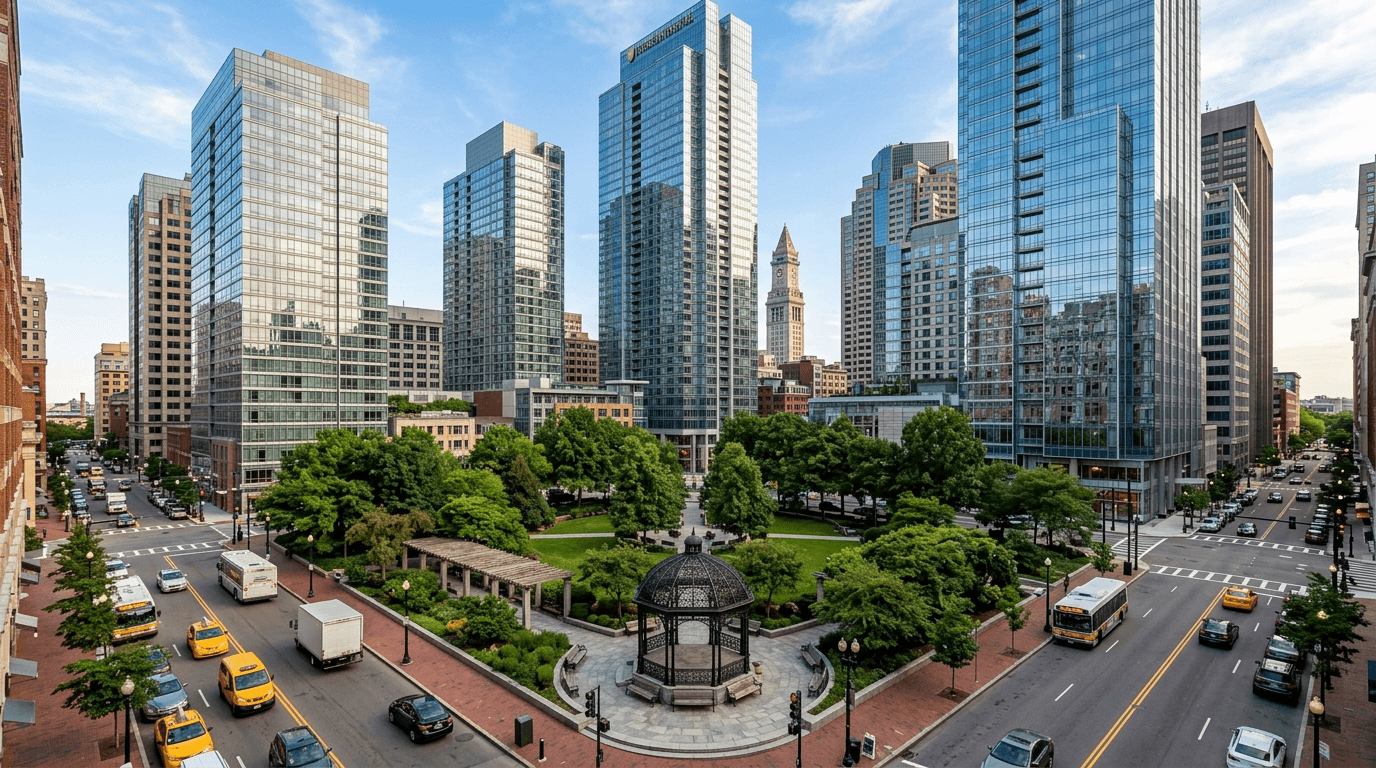
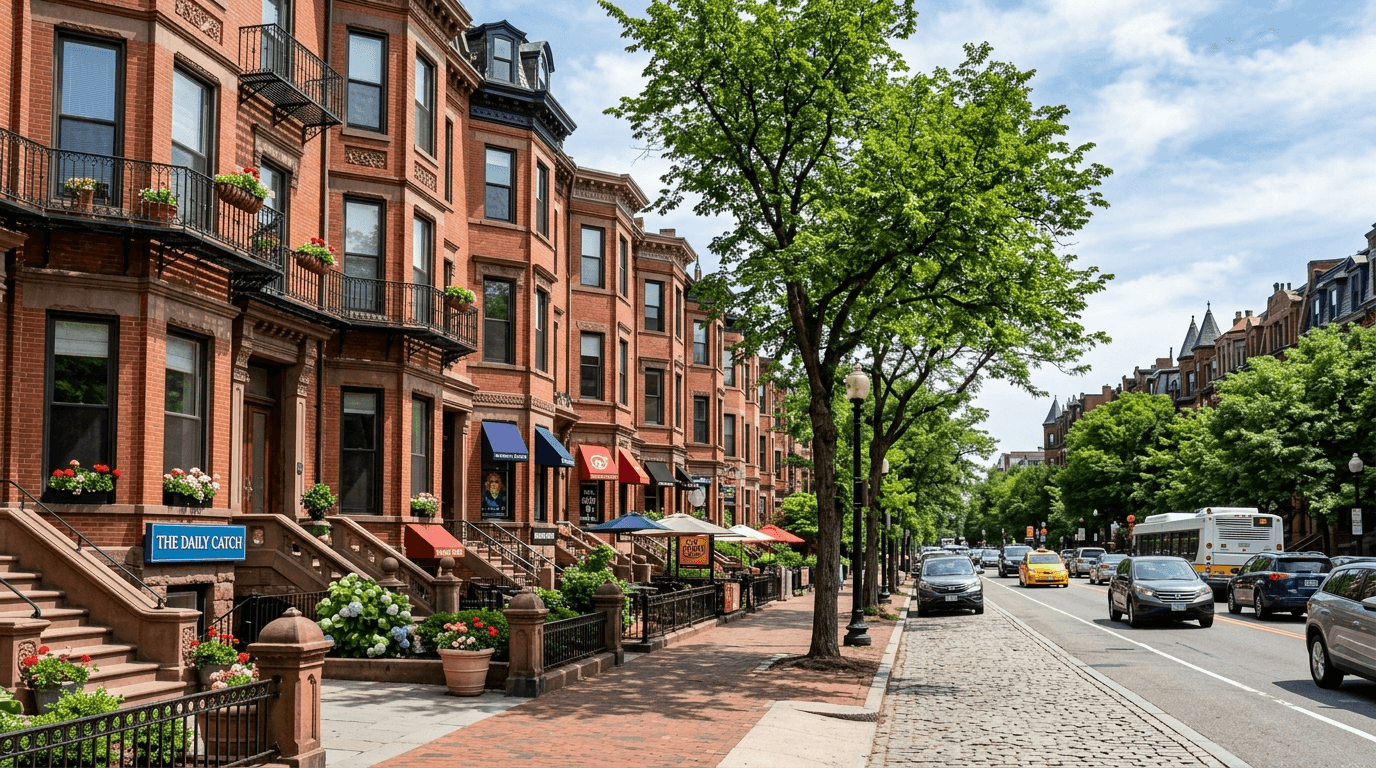
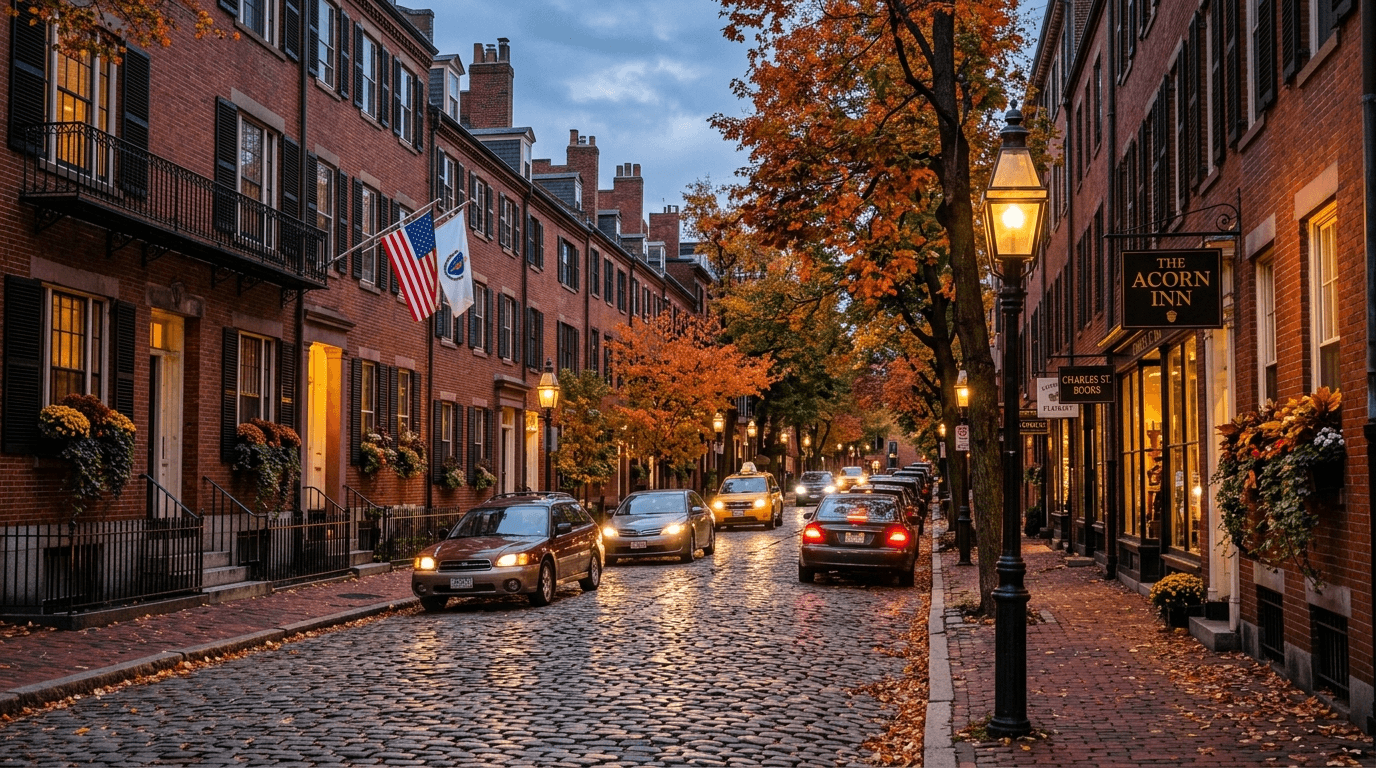
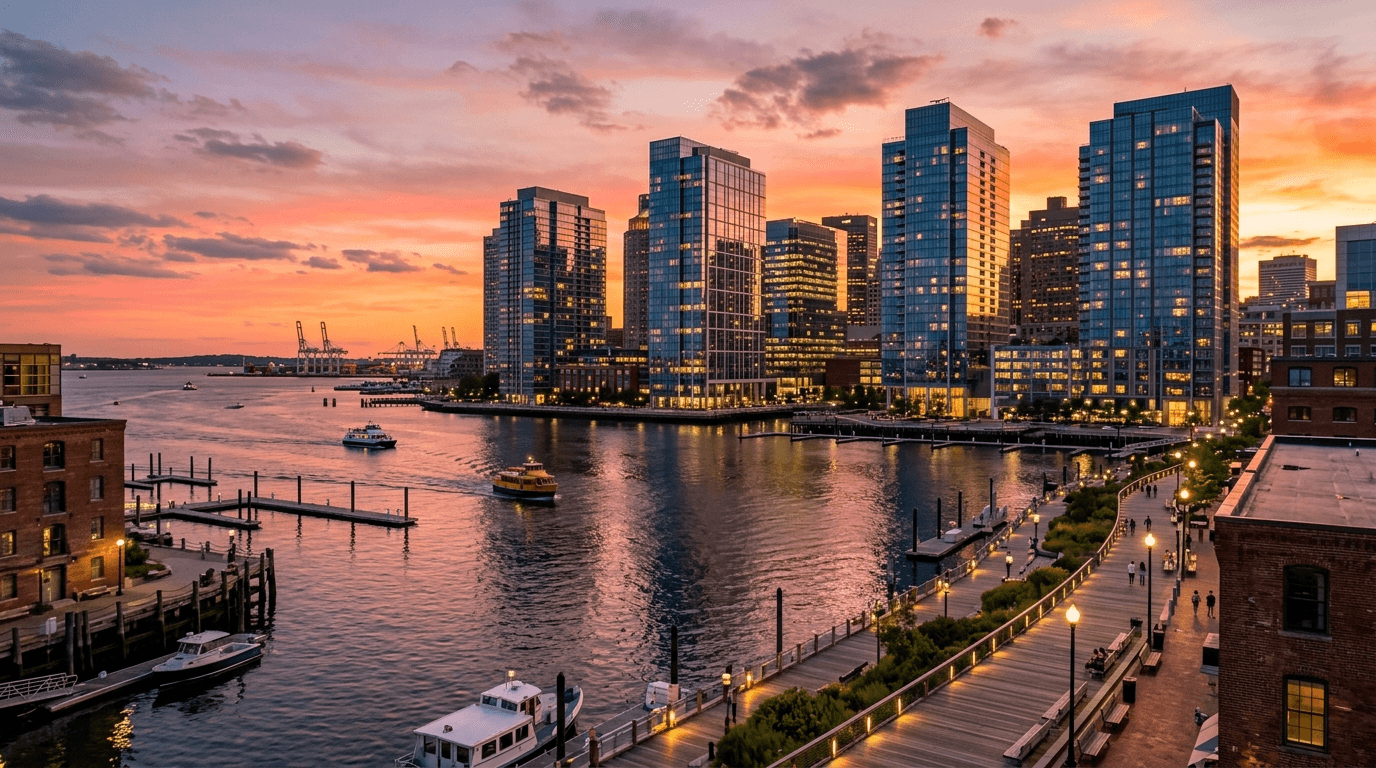
Downtown Boston is where the city's oldest streets run straight into its newest towers. It's the neighborhood people start looking at once they're finished with 40-minute commutes — when the goal becomes having your gym, your office, your Saturday coffee, and your Sunday walk along the harbor all inside a ten-minute radius. What follows is a look at what living here actually feels like, what you'd be buying, where people gather, and how you'd get around.
What Is the Vibe Like in Downtown Boston?
Downtown Boston is a high-energy, 24/7 urban core with a Walk Score of 96 — one of the most walkable environments in the entire country. It's busy by design. That's the appeal.
The rhythm here is distinct. On weekday mornings, the Financial District floods with commuters spilling out of South Station and Downtown Crossing. By 6 p.m. the crowd turns over, and the after-work set takes over Post Office Square, the rooftop bars, and the food halls. Weekends in the Financial District proper are quieter than most people expect, while Downtown Crossing and the Greenway hum along year-round.
Here's what I tell clients touring for the first time: this is not a neighborhood where you'll learn your mail carrier's name. It's a neighborhood where you'll never need a car, never be more than three minutes from a great espresso, and never have to plan a night out more than twenty minutes in advance.
A few grounding realities:
•You don't need a car. That's genuinely the single biggest lifestyle differentiator versus the inner-ring suburbs.
•Boston is a safe big city — consistently ranked among the safest large cities in the U.S., with just 5 homicides citywide reported in 2026.
•The trade-off is space and cost. Boston's overall cost of living runs about 66% higher than the national average, and housing costs roughly 150% higher. Units are smaller. That's the deal you're making.
•Winters are real. Roughly 54 inches of average annual snowfall and January highs near 37 degrees. Downtown handles it better than most — everything is walkable and the T runs underground.
If proximity matters more to you than square footage, Downtown is built for you. And the data backs that instinct up across the whole young-professional cohort in this city.
Where Young Professionals Put Their Priorities
Transit access and walkability dominate neighborhood preferences, while parking ranks far lower—an ideal fit for an urban Boston profile.
Transit access and walkability dominate neighborhood preferences, while parking ranks far lower—an ideal fit for an urban Boston profile.
Series
Label
Value
Neighborhood Selection Factors
Access to public transportation (Very Important)
80%
Neighborhood Selection Factors
Being able to walk to amenities (Very Important)
75%
Neighborhood Selection Factors
Bike lanes and bike paths (Very/Somewhat Important)
59%
Neighborhood Selection Factors
Availability of on-street parking (Very Important)
Eighty percent of Boston-area young professionals rate access to public transportation as "very important," and 75% say the same about walkability. On-street parking? Only 25% care. Downtown is essentially the physical embodiment of that preference set.
What Are Condos and Townhomes Like in Downtown Boston?
Downtown Boston is a condo market, full stop. Roughly the entire residential inventory here is high-rise, mid-rise, or converted loft product — traditional lot sizes simply don't exist, replaced instead by shared building amenities.
Here's how the housing stock breaks down in practice:
Glass-and-steel high-rises. The newest towers cluster near the waterfront edges and along the Financial District's taller corridors. Floor-to-ceiling glass, open-plan layouts, minimalist finishes, in-building amenity decks. These carry the highest HOA fees and the highest price-per-square-foot.
Converted industrial and office lofts. Some of the best value in Downtown lives here — exposed brick, timber beams, oversized windows, and ceiling heights nothing new construction can match. The Leather District and the fringes of the Financial District have the strongest concentration.
Historic conversions. Nineteenth- and early-twentieth-century commercial buildings turned residential, usually with fewer units and more character, though sometimes with lighter amenity packages.
Modern multi-level townhomes. Rare, tightly held, and typically the priciest per unit. Zero lot line, vertical living, private entry.
What Should I Expect to Pay in Downtown Boston?
Downtown sits at the top end of the Boston condo market. Citywide, pricing has been steady and moderately appreciative through 2026, with the pressure concentrated in walkable, transit-served neighborhoods exactly like this one.
Boston 2026 Market Snapshot: Prices, Inventory & Momentum
Headline citywide indicators for young professionals deciding whether Boston’s walkable, transit-rich lifestyle is worth the premium in 2026.
Citywide, the median list price sits at $879,000, up 5.4% year over year, with $681 per square foot and about 6.9 months of supply across 2,860 active listings. Downtown runs materially above those numbers. This is the premium tier of the Boston condo landscape.
For context on how condos create a lower entry point relative to single-family product across Greater Boston:
Condo vs. Single-Family Prices in Key Greater Boston Markets
A side-by-side view of 2026 median prices shows how condos can create a lower entry point in high-demand inner-ring markets like Newton, Belmont, Watertown, and Waltham.
Newton
Belmont
Watertown
Waltham
A side-by-side view of 2026 median prices shows how condos can create a lower entry point in high-demand inner-ring markets like Newton, Belmont, Watertown, and Waltham.
That gap is the whole argument for urban condo living. In Newton, the spread between a single-family home and a condo is $815,000. Downtown removes the single-family option entirely — you're buying into density on purpose.
What Do HOA Fees Typically Look Like in Downtown Boston Condos?
This is the number most first-time Downtown buyers underestimate. The Boston metro median monthly HOA fee is $386, and 29.9% of metro homeowners pay more than $500 per month. Downtown skews well above that.
Reported Downtown ranges run from roughly $612 on the low end to $3,397 at the top. Full-service buildings — 24-hour concierge, valet, fitness center, roof deck — commonly land between $1,500 and $2,800 per month.
When I walk buyers through a Downtown building, I push hard on three things before anyone starts talking about the kitchen:
1. Reserve funding. Fannie Mae currently requires a 10% minimum reserve allocation, rising to 15% effective January 4, 2027. Underfunded associations become financing problems.
2. Master insurance deductible. The maximum allowable per-unit deductible is $50,000. Anything structured poorly here creates real risk.
3. What the fee actually buys. A $2,400 fee that includes heat, hot water, concierge, and a gym is a very different proposition than a $2,400 fee that includes trash removal.
Should I Rent or Buy in Downtown Boston?
Rents here scale sharply with bedroom count, which is why studios and one-bedrooms remain the core search set for most young professionals.
Downtown Boston Rent by Apartment Size
Downtown rents scale quickly with bedroom count, underscoring why studios and one-bedrooms remain the core search set for many urban professionals.
Downtown rents scale quickly with bedroom count, underscoring why studios and one-bedrooms remain the core search set for many urban professionals.
Studios average $3,008, one-bedrooms $3,793, two-bedrooms $5,101, and three-bedrooms $6,454.
On the buy side, the FY2026 math looks like this: Boston's residential tax rate is $12.40 per $1,000 of assessed value, with a residential exemption worth up to $4,353.74 for owner-occupants. Closing costs typically run 2% to 5%. Recent 30-year fixed rates have hovered in the 6.36%–6.47% range.
A practical illustration: on a $949,000 condo with 20% down, principal and interest run about $4,729 per month, with property tax around $618 post-exemption — before HOA. Cash to close lands somewhere between $208,780 and $237,250.
My honest read: if you're staying under three years, rent. Downtown's transaction costs and HOA structure push the breakeven horizon out further than it would be in a lower-fee neighborhood.
What New Development Is Happening in Downtown Boston?
The most consequential thing happening to Downtown's housing supply right now is the city's office-to-residential conversion program.
Office-to-Residential Conversion Program
A major downtown housing initiative converting underused office space into new homes—directly relevant to Boston’s evolving live-work urban core.
22 applications covering 27 buildings and 1.2 million square feet of office space, with 1,517 new homes planned — including 284 income-restricted units. Five projects are already under construction, representing 306 units.
For buyers, this cuts two ways. New inventory in a supply-constrained core means more choice. But conversion buildings vary enormously in layout quality, natural light, and mechanical systems. Some are excellent. Some are office floor plates with drywall. I evaluate these individually, never as a category.
Where Do People Actually Gather in Downtown Boston?
Downtown's social life organizes around three things: green space, food halls, and the arena-and-theater corridor.
Norman B. Leventhal Park at Post Office Square is the neighborhood's living room. A little over an acre of manicured lawn and pergola, ringed on all sides by office towers. It's where the Financial District eats lunch, where the seasonal farmers market sets up, and where outdoor fitness classes run once the weather turns. If you want to understand Downtown's social fabric in a single visit, sit there on a Wednesday in September.
The Rose Fitzgerald Kennedy Greenway is the connective tissue — a linear park stitching Downtown to the North End and the waterfront, complete with food trucks, public art, and the carousel. For a lot of residents, it's the default running route.
Food halls and rooftop lounges do the networking work. High Street Place and Faneuil Hall's South Market area serve as the neighborhood's default meeting spots — the "let's grab something after work" answer when nobody wants to commit to a reservation. Mike & Patty's at High Street Place is a legitimate weekend destination in its own right.
Coffee is a competitive sport here. Gracenote, Ogawa, Sip Café — the density of serious espresso inside a half-mile radius is unusual even by Boston standards.
Fitness is embedded in the neighborhood. Equinox on Franklin Street, B/SPOKE, F45, EverybodyFights. Downtown has one of the highest concentrations of boutique studios in the city, which matters when your building's gym amounts to a treadmill and two dumbbells.
Culture and sports sit a short walk or one stop away: the Theater District, TD Garden at North Station, and the contemporary galleries scattered through Downtown Crossing and the Leather District. And Roche Bros. at Downtown Crossing answers the grocery question people always raise before they ask about anything else.
Downtown carries serious commercial weight, too — the neighborhood draws roughly $3.1 billion in annual buying power, which is why retail keeps investing here even through the office market's transition.
How Is the Commute From Downtown Boston?
Downtown Boston is the convergence point of the entire MBTA system. Every subway line either runs through it or terminates at its edge — which means your commute is measured in minutes, not transfers.
What Are the Transit Options in Downtown Boston?
•Downtown Crossing — Red and Orange Line interchange. This is the neighborhood's spine.
•State Street — Orange and Blue Lines. Direct shot to Logan Airport via the Blue Line to Airport Station.
•Government Center — Green and Blue Lines.
•Park Street — Red and Green Lines, at the Common's edge.
•South Station — Red Line, Silver Line, commuter rail to the South Shore and Providence, and Amtrak.
•North Station — Green and Orange Lines, plus commuter rail north to the North Shore, Lowell, and Fitchburg.
In practical terms: Cambridge and Kendall Square are a ten-to-fifteen-minute Red Line ride. The Longwood Medical Area is a Green Line trip. Back Bay is a twenty-minute walk or one stop on the Orange Line. Logan runs roughly fifteen minutes door-to-gate-area via the Blue Line.
That's the strongest single argument for Downtown over the inner-ring suburbs. Watertown, Waltham, and Belmont offer more square footage per dollar, but they also require either a car or a bus-to-subway chain. Downtown gives you back the hour.
What About Biking and Driving in Downtown Boston?
Bluebikes stations are dense throughout the neighborhood, and protected lanes have expanded meaningfully along the Greenway corridor and its connecting streets. That matters more than people assume — 59% of Boston young professionals rate bike infrastructure as very or somewhat important.
Driving is the weak point, and I won't pretend otherwise. Boston drivers lose roughly 79 hours per year to congestion, though that figure improved about 10% between 2023 and 2024. You have I-93 and the Ted Williams Tunnel at your doorstep for regional travel, and the Mass Pike is a short hop west. But parking Downtown is expensive and, in many buildings, a separately deeded purchase.
My standing advice: if you're buying Downtown and you own a car, price the parking space as its own line item, not an afterthought. Then ask yourself, seriously, whether you need it at all.
Is Downtown Boston Right for You?
Downtown works best for buyers and renters who want the city at maximum intensity — transit convergence, walkability, restaurants, gyms, and culture stacked into a few dozen blocks — and who are willing to trade square footage and absorb a meaningful HOA line item to get it.
It works less well if you're prioritizing outdoor space, a quiet street, or the lowest possible monthly carrying cost.
If you're weighing a Downtown condo against something in Southie, the Seaport, or a western suburb, run the actual numbers side by side: purchase price, HOA, taxes with the residential exemption, parking, and commute time converted into hours per year. That comparison usually makes the decision obvious.
When you're ready to look at specific buildings, we can pull reserve studies, HOA budgets, and recent building-level sale history before you ever step inside a unit. That's where the real decisions get made in this neighborhood.
Is Downtown Boston, MA a good place for young professionals?
Downtown Boston, MA is built around the priorities many young professionals value most: walkability, public transportation, short commutes, restaurants, gyms, coffee shops, and culture. The neighborhood has a Walk Score of 96 and functions as a high-energy urban core where daily needs are concentrated within a small radius.
Is Downtown Boston, MA a good neighborhood for family living?
Downtown Boston, MA works best for households that prioritize transit access, walkability, and proximity to restaurants, parks, offices, and cultural venues. It works less well for families seeking a quiet street, private outdoor space, or the lowest possible monthly housing cost.
What types of condos and townhomes are common in Downtown Boston, MA?
Downtown Boston, MA is overwhelmingly a condo market, with high-rise towers, mid-rise buildings, converted lofts, and historic commercial-to-residential conversions making up the core inventory. Traditional lot sizes are essentially absent, and modern multi-level townhomes are rare, tightly held, and typically expensive.
How expensive are condos and HOA fees in Downtown Boston, MA?
Downtown Boston sits above Boston’s citywide condo pricing, where the median list price is $879,000 and the median price per square foot is $681. Downtown is considered a premium condo market because of its walkability, transit access, and central location.
What are typical HOA fees for Downtown Boston, MA condos?
Downtown Boston condo HOA fees can run from about $612 per month on the low end to roughly $3,397 per month at the top. Full-service buildings with features such as a 24-hour concierge, valet, fitness center, and roof deck commonly fall between $1,500 and $2,800 per month.
Should I rent or buy in Downtown Boston, MA?
Renting is generally more practical in Downtown Boston, MA if the expected stay is under three years, because transaction costs and HOA fees can extend the breakeven timeline. Average rents are about $3,008 for a studio, $3,793 for a one-bedroom, $5,101 for a two-bedroom, and $6,454 for a three-bedroom.
How is the commute from Downtown Boston, MA?
Downtown Boston, MA is one of the strongest commute locations in the city because every MBTA subway line either runs through it or connects at its edge. Downtown Crossing, State Street, Government Center, Park Street, South Station, and North Station provide access to subway, commuter rail, Amtrak, and airport connections.
What should families consider about schools in Downtown Boston, MA?
Downtown Boston’s core housing profile is defined by condos, transit access, walkability, and high monthly carrying costs rather than school-centered residential living. Families considering Downtown should evaluate assigned schools alongside building-specific costs, unit size, outdoor space needs, and commute patterns.