Living in Beacon Hill: The Essential Guide for Young Professionals
Beacon Hill’s busy historic vibe: 99 Walk Score, 100 Transit Score, $1.23M median sold price, and car-free commutes to MGH, downtown and Kendall.
Written ByAndrew Schwartz
PublishedSeptember 9, 2026
We're SmartHub Boston, a data-driven brokerage led by Andrew Schwartz serving buyers, sellers, investors and landlords across Boston, Cambridge, Newton and Brookline. Serving Boston, Newton, Brookline, Cambridge, Somerville, Watertown, Natick, Wellesley and Weston, MA.
# Living in Beacon Hill: The Ultimate Guide for Young Professionals
Beacon Hill is one of the few Boston neighborhoods where you can live inside a 19th-century brick townhouse, reach a Financial District desk in fifteen minutes on foot, and still beat your takeout home. For young professionals, that efficiency is hard to beat. So is the competition to buy in.
Here's what to know before you tour.
What Is the Vibe Like in Beacon Hill for Young Professionals?
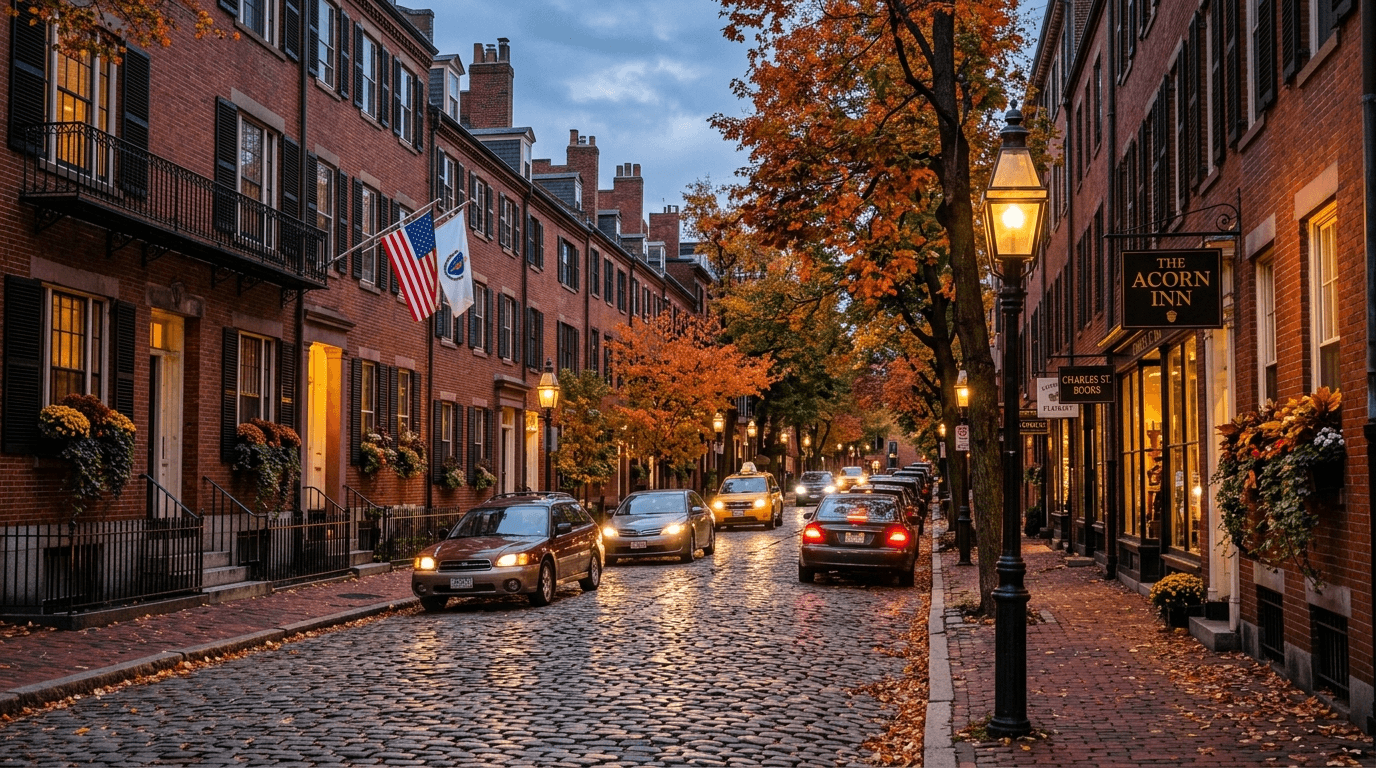
Beacon Hill is urban and busy, not sleepy. It photographs like a postcard, but it operates like a downtown neighborhood — foot traffic all day, Charles Street humming from breakfast through last call, and a constant flow of MGH staff, State House workers, students, and commuters cutting through.
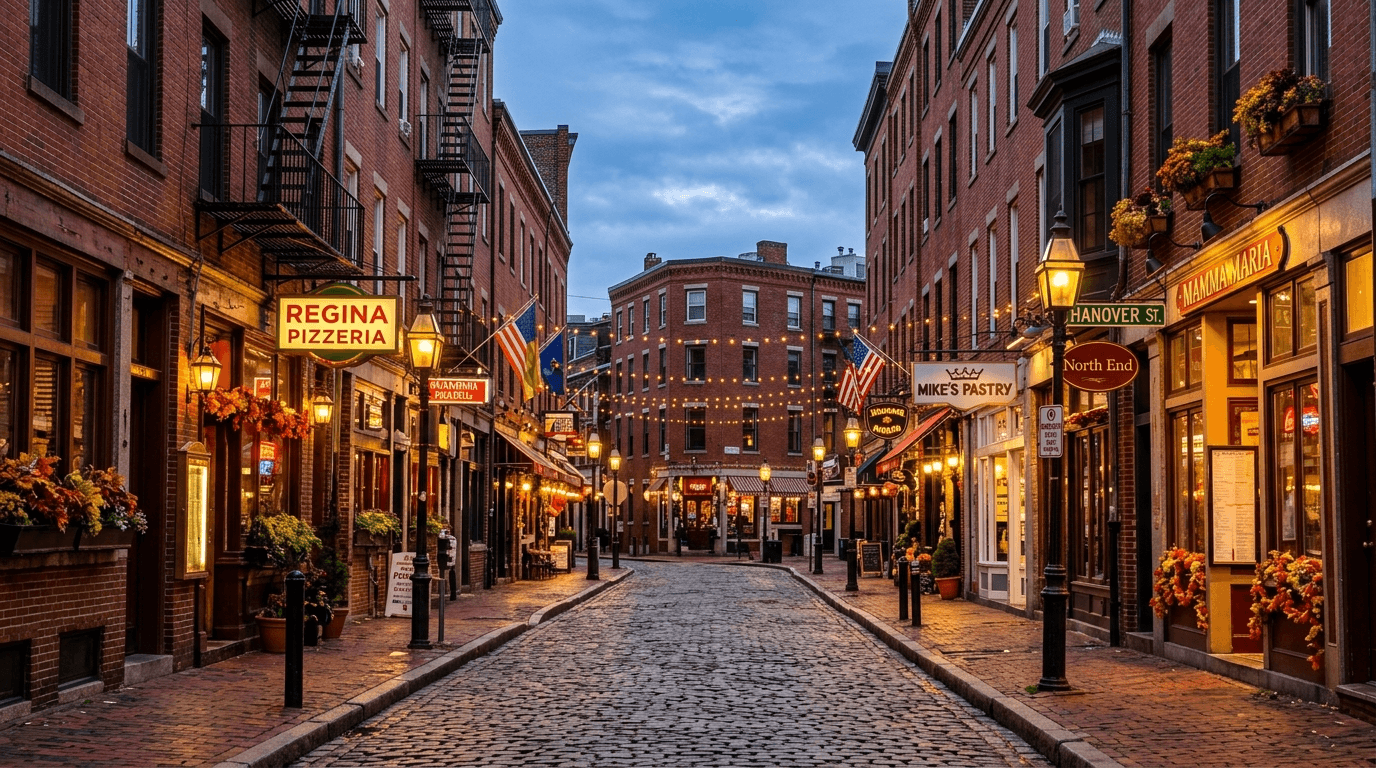
That catches people off guard. The gas lamps and cobblestones suggest a quiet historic village, and the residential side streets — Chestnut, Mount Vernon, the pocket around Louisburg Square — really are calm after dark. But the neighborhood sits at the crossroads of Boston Common, the Charles River Esplanade, Massachusetts General Hospital, and downtown. Something is always moving.
Day to day, that translates into a few realities:
•You will not need a car. Beacon Hill posts a 99 Walk Score, a perfect 100 Transit Score, and a 72 Bike Score.
•You will trade space for location. Units are compact. Closets are an afterthought. Nobody moves here for square footage.
•It's a mixed-age neighborhood. Unlike Seaport or parts of South Boston, Beacon Hill isn't dominated by one demographic. Your neighbors might be twenty-eight or they might have owned their unit since the 1980s.
•The mobility scores are the whole pitch. A near-perfect walk score paired with a perfect transit score is what makes car-free living here practical rather than aspirational.
Beacon Hill Mobility Scores
Beacon Hill’s near-perfect walk and transit scores support a car-light lifestyle—one of the strongest draws for urban young professionals commuting around downtown Boston.
Walk Score99/100
Transit Score100/100
Bike Score72/100
Beacon Hill’s near-perfect walk and transit scores support a car-light lifestyle—one of the strongest draws for urban young professionals commuting around downtown Boston.
When clients say they want "walkable but not loud," I point them toward the north slope near Myrtle and Revere Streets, or up above Charles toward Pinckney. When they want to walk out the door and into a bar, the answer is Charles Street and the Flat of the Hill.
What Are Condos and Townhomes Like in Beacon Hill?
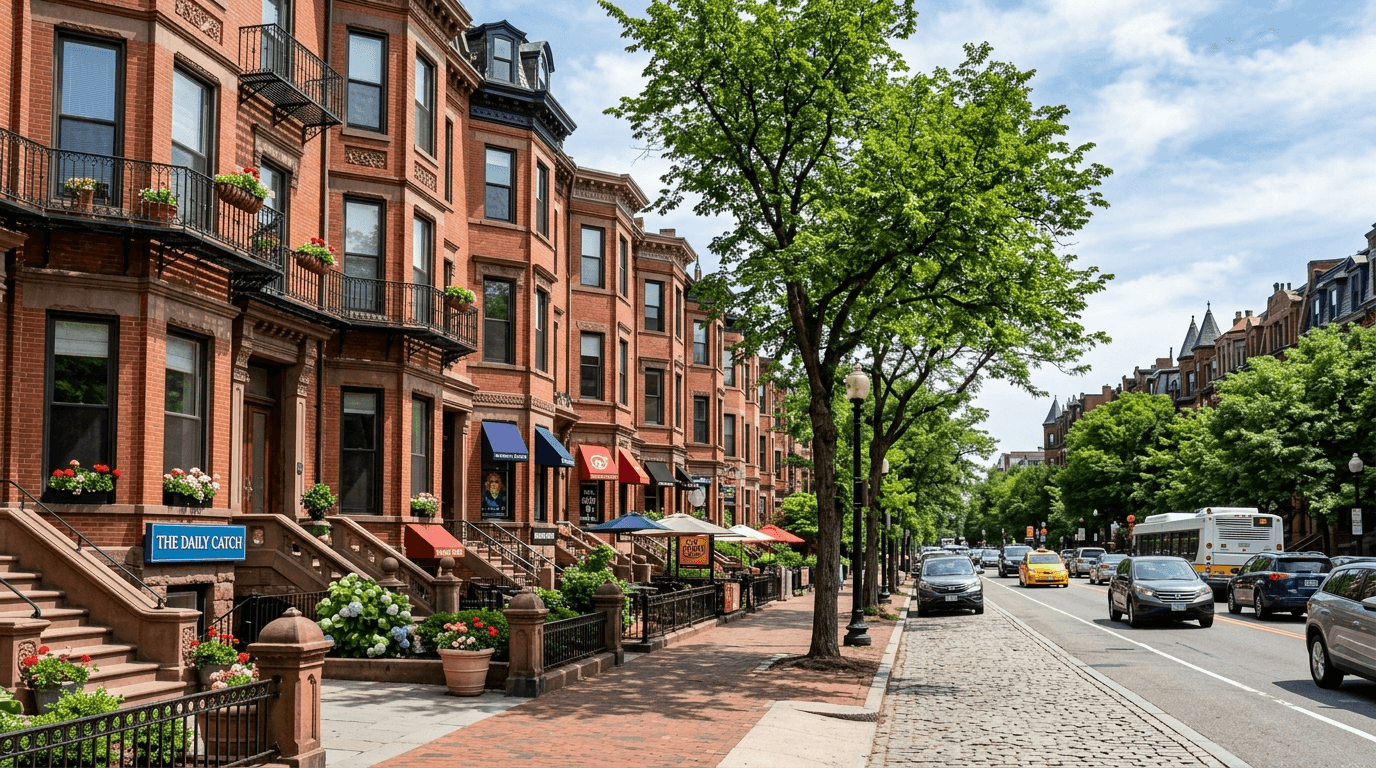
Beacon Hill's housing stock is almost entirely historic brick rowhouses — most subdivided into condominiums, with a smaller supply of intact single-family townhomes at the top of the market. New construction inside the historic district is essentially nonexistent.
What Architectural Styles Will You See in Beacon Hill?
The Hill was developed largely between 1800 and 1850, and it shows:
•Federal style — flat brick facades, symmetrical windows, delicate fanlight doorways, often four or five stories with a dormered top floor.
•Greek Revival — heavier proportions, granite lintels, pilastered entryways, more elaborate ironwork. Common along Mount Vernon and Chestnut.
•Purple window glass, original wide-plank floors, working fireplaces (usually decorative now), and staircases that were never designed with a moving company in mind.
•Gas-lit streets and brick sidewalks, protected by the Beacon Hill Architectural Commission — the reason the neighborhood still looks like it did a century ago, and the reason exterior changes require approvals.
What Do Lot Sizes Look Like in Beacon Hill?
Tiny, by any suburban standard. Beacon Hill rowhouses sit on narrow, deep lots built shoulder-to-shoulder with no setbacks and no driveways. The parcels are a small fraction of what Boston's zoning code nominally contemplates for residential lots, which is exactly why so much of the neighborhood is legally nonconforming and why almost nothing new gets built.
For a busy professional, that's usually a feature. No yard, no roof, no driveway to shovel. Your outdoor maintenance obligation is roughly zero.
What Does Beacon Hill Inventory Actually Look Like Right Now?
Two things worth internalizing before you start touring.
First: the median listing price and the median sold price are very far apart. As of August 2026, Beacon Hill showed a median listing price around $2,172,500 against a median sold price of roughly $1,227,250, with price per square foot near $1,410/sq ft, about 94 active listings, median days on market around 75 days, and a sale-to-list ratio of 97%.
Beacon Hill Market Snapshot: August 2026
Headline numbers for Beacon Hill’s current sales and rental market—useful for young professionals weighing buy-versus-rent in a highly urban, transit-rich neighborhood.
That gap is instructive. The asking market is skewed upward by a handful of trophy properties, while the transacting market is considerably more attainable.
Second: the spread inside the neighborhood is enormous. Scan what's actually on the market and you'll find 45 Temple St #212 at $1,685,000 for 1,468 sqft sitting in the same neighborhood as 46 Beacon Street #5 at $10,500,000 for 3,244 sqft. Meanwhile 95 Beacon #9, at $2,195,000 for 1,271 sqft, is priced far more aggressively per foot than the much larger 142 Chestnut Street #4-5 at $3,900,000 for 2,985 sqft. Two condos three blocks apart can be radically different investments.
Beacon Hill Active Condo Listings: Price vs. Size
Individual active listings show the spread between compact entry-level condos and large luxury residences, giving buyers a clearer view of how size and pricing cluster in Beacon Hill.
Sub-market matters more here than in almost any Boston neighborhood. The North Slope and the West End edge are generally where a first-time buyer's money goes furthest. The South Slope and the Flat of the Hill are where the trophy inventory lives.
What Do HOA Fees Look Like in Beacon Hill Condos?
Higher than the city norm. And in small self-managed associations inside 200-year-old buildings, special assessments are a real risk. Old roofs, old chimneys, old party walls, and historic-commission-approved repairs are all expensive.
My practical advice: when we review a Beacon Hill condo doc package, I care less about the monthly fee than about the reserve balance, the last five years of assessments, and whether the association has a capital plan. A low fee in a building with no reserves is not a bargain.
One line item people routinely forget: parking. Deeded spots are scarce and priced accordingly, and garage rates are steep. Most young professionals here simply don't own a car — which is the rational answer.
Should You Rent or Buy in Beacon Hill?
For most young professionals under 30, renting first is the smarter entry — though Beacon Hill's rent-to-own math is closer than people assume at the lower end of the market.
The rental market is surprisingly deep for a neighborhood this small: roughly 273 rental properties with a median rent near $3,150/mo as of August 2026. What you're paying for is the location, not a premium above what a comparable downtown-adjacent apartment costs.
Where Beacon Hill is an outlier is on the purchase side. Compared with the neighborhoods most often marketed to young professionals, it sits firmly at the premium end.
Best-Fit Boston Neighborhoods for Young Professionals: Cost Comparison
Compares median home prices and median rents across neighborhoods commonly highlighted for singles and young professionals. Back Bay–Beacon Hill sits at the premium end, while Allston-Brighton and East Boston offer more approachable entry points.
Median Home Price
Median Rent Price
Compares median home prices and median rents across neighborhoods commonly highlighted for singles and young professionals. Back Bay–Beacon Hill sits at the premium end, while Allston-Brighton and East Boston offer more approachable entry points.
One caveat before you compare that chart to the numbers above: it uses a combined Back Bay–Beacon Hill statistical area from a different source, so its medians run well below the Beacon Hill–only median sold price and median rent cited earlier. Use it for relative ranking between neighborhoods, not for absolute Beacon Hill pricing.
If your priority is building equity fast, Allston-Brighton, East Boston, and Jamaica Plain will get you in the door for far less. If your priority is a walk-to-work life in a supply-constrained historic district that can never be built up, Beacon Hill is a genuinely different asset class.
One more factor working in buyers' favor right now: Beacon Hill has not been behaving like a frenzied market. A 97% sale-to-list ratio and median days on market around 75 days tell you sellers are generally accepting less than asking and waiting a while to get it. That combination leaves room to negotiate — room that simply doesn't exist in hotter neighborhoods.
Where Do People Actually Gather in Beacon Hill?
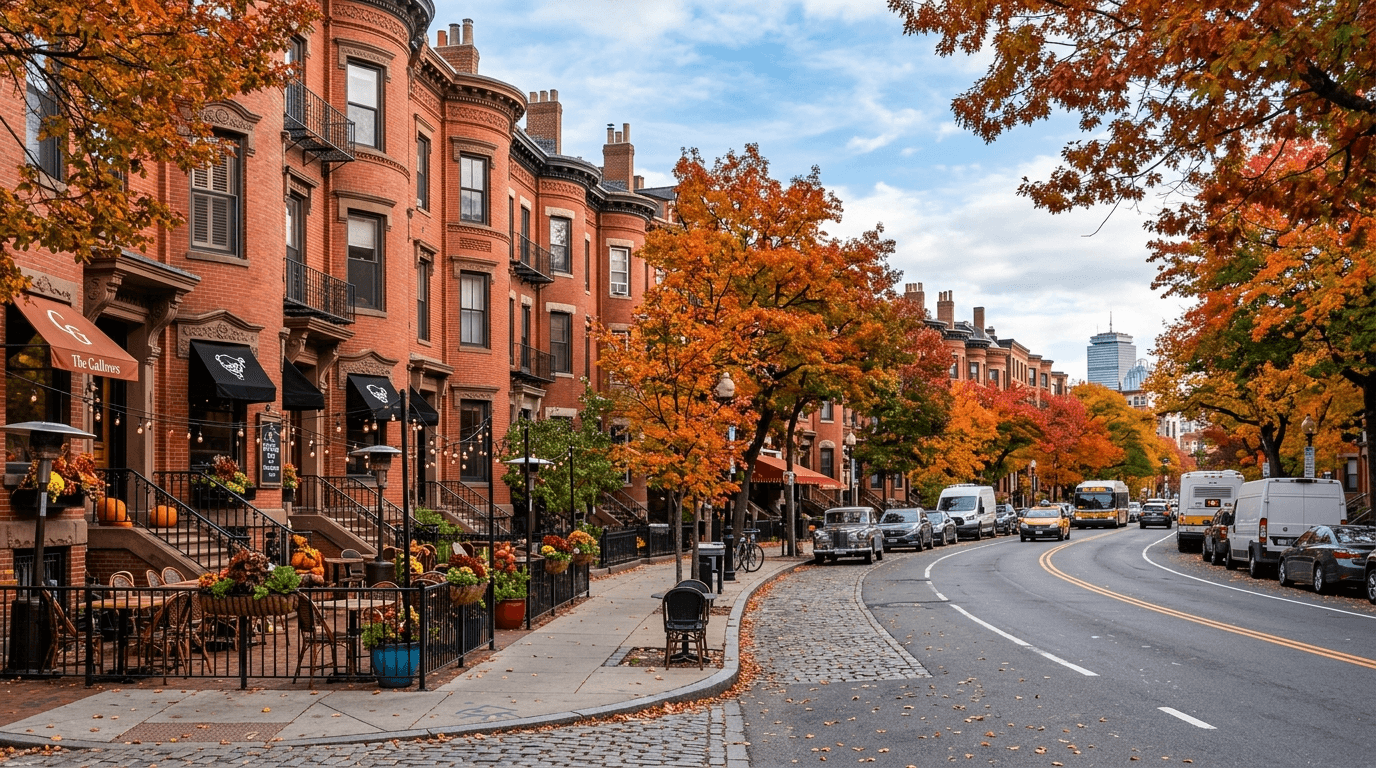
Charles Street is the neighborhood's main street and social spine. Boston Common and the Public Garden are the shared backyard. A handful of small taverns and cafés serve as the de facto living rooms.
Where Do Beacon Hill Residents Spend Time on Charles Street?
This is where your weekends go. It's a low-rise corridor of independent boutiques, antique dealers, wine shops, grocers, and restaurants packed into a walkable stretch. The Beacon Hill retail submarket has historically been extraordinarily tight, and storefronts here don't sit empty for long — part of why the street stays lively.
Practically speaking, Charles Street covers your daily life. Coffee and pastries at Tatte Bakery & Cafe , prepared food and provisions at DeLuca's Market , and the neighborhood pharmacy institution, Gary Drug Co. — exactly the kind of business that survives only in neighborhoods like this one.
What Green Space Do Beacon Hill Residents Actually Use?
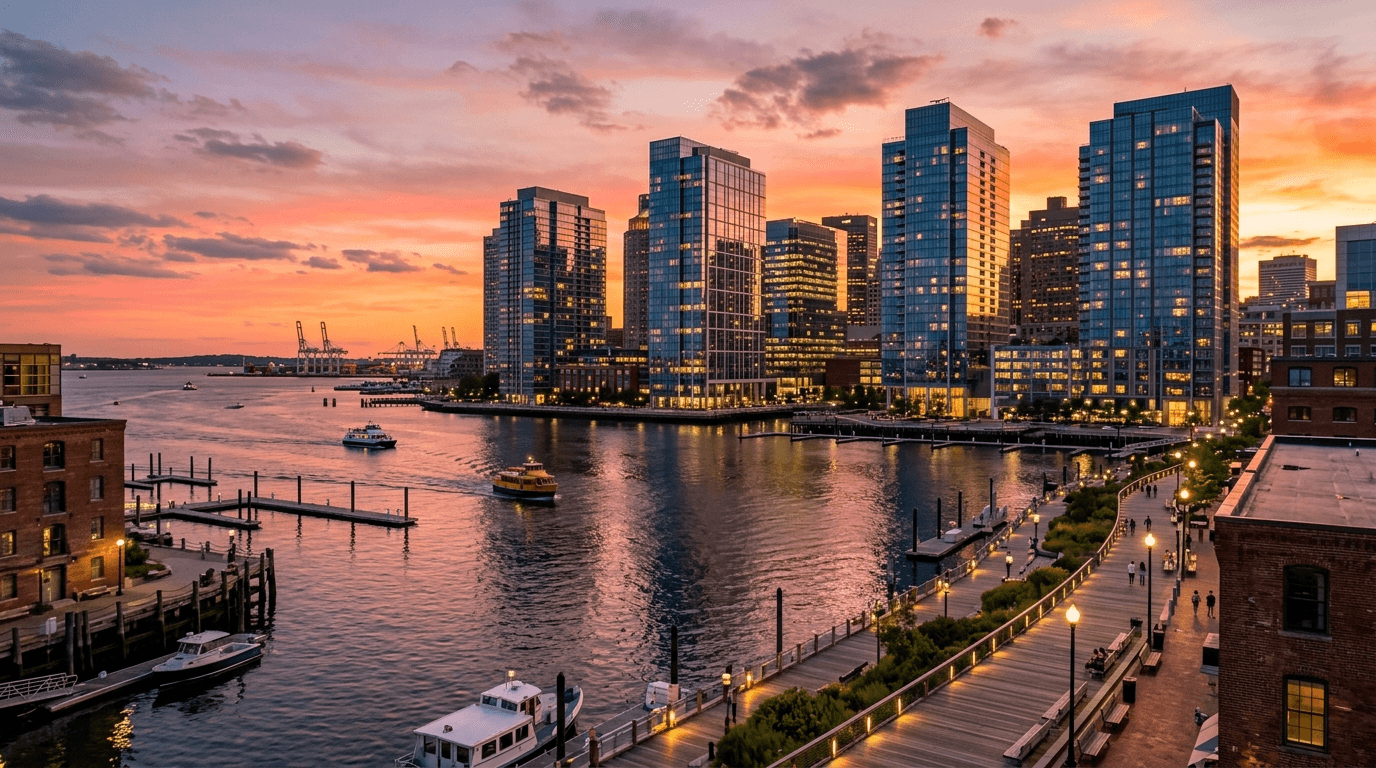
Your green space is world-class and free. Boston Common and the Public Garden sit directly on the neighborhood's southeastern edge — that's your running loop, your lunch break, your Saturday. The Esplanade Cycling and Trekking Path along the Charles River runs off the northwestern edge, giving you an uninterrupted riverside route toward Cambridge and the BU bridges.
One heads-up if you're touring: the Boston Water and Sewer Commission has a water main rehabilitation project along the Beacon Street Mall at the Common, scheduled for completion April 11th, with a permanent work zone, detour signage at Joy, Walnut, and Spruce Streets, and pedestrian access maintained through the Park and Charles Street entrances.
Beacon Street Mall Water Main Rehabilitation Project
Infrastructure work along the Beacon Street Mall affects pedestrian routing around Boston Common, with access maintained through select entrances and detour signage nearby.
Project LeadBoston Water and Sewer Commission (BWSC)
Project TypeWater main rehabilitation
Scheduled Completion DateApril 11th
Work Zone TypePermanent work zone
Detour Signage LocationsJoy, Walnut, and Spruce Streets
Infrastructure work is a permanent feature of life in a 200-year-old neighborhood. Worth asking about on any given block before you sign.
What Are Evenings and Networking Like in Beacon Hill?
The social scene skews toward small rooms rather than big venues. Acorn Street is the photo op; the taverns are where people actually gather. The Sevens Ale House is the unpretentious after-work standby, and Beacon Hill Books & Cafe has become a genuine third space for the work-from-home-three-days crowd.
If you want nightlife at scale, you're not looking for Beacon Hill — you're looking for the Seaport or the Fenway. What Beacon Hill offers instead is a ten-minute walk to all of it, and quiet when you come home.
How Is the Commute From Beacon Hill to Downtown Boston and Cambridge?
Beacon Hill has a perfect Transit Score of 100 — arguably the single best-connected residential neighborhood in Boston. Two subway lines serve it directly, and three of the city's largest employment centers are within walking distance.
Which MBTA Stations Serve Beacon Hill?
•Charles/MGH (Red Line) — on the north side at the base of the hill. This is your Cambridge connection: Kendall/MIT is one stop, Central and Harvard follow, and Downtown Crossing and South Station run the other direction. If you work in Kendall Square biotech or tech, this station alone justifies living here.
•Park Street (Green + Red Lines) — at the corner of the Common. The Green Line's B/C/D/E branches fan out toward Back Bay, Fenway, Longwood Medical Area, Brookline, and Newton. The transfer at Park is one of the most useful in the system.
•Bowdoin and Government Center (Blue Line) — on the eastern edge, with a direct ride to the Financial District, the Aquarium, and Logan Airport via the Airport station shuttle.
•North Station — about a ten-minute walk, for Commuter Rail service north and west (Fitchburg, Lowell, Newburyport/Rockport) plus the TD Garden.
•South Station — one or two Red Line stops away for Providence, Framingham/Worcester, and Amtrak.
Which Beacon Hill Commutes Are Walkable?
This is the neighborhood's real advantage. On foot:
•Massachusetts General Hospital — 5 to 10 minutes. MGH residents, nurses, and researchers make up a huge share of Beacon Hill's renter base for precisely this reason.
•The Massachusetts State House and government offices — 3 to 5 minutes.
•Downtown Crossing and the Financial District — 10 to 20 minutes.
•Back Bay and Newbury Street — 10 to 15 minutes across the Public Garden.
•Suffolk University, Emerson, and the Theater District — under 15 minutes.
Work at any of those, and you can plausibly go carless and never touch a train on a normal day. Price out downtown garage parking against a monthly transit pass and the financial argument makes itself.
What Is Biking and Driving Like in Beacon Hill?
The 72 Bike Score is respectable but honest. The hill itself is steep, and the historic cobblestones are unkind to narrow tires. The Esplanade path and the Charles River bike routes are excellent once you're down off the slope, and the city has continued expanding Bluebikes coverage downtown. A Charles Street reconstruction has also been floated in longer-range city planning — worth tracking if you're buying on or near that corridor.
Driving is a different story. Storrow Drive is at the neighborhood's northern doorstep, and I-93 and the Mass Pike are accessible via downtown. But street parking is resident-permit and genuinely scarce, and the streets themselves were designed for horses. Owning a car in Beacon Hill is a lifestyle choice, not a convenience.
Is Beacon Hill Worth It for a Young Professional?
Yes — if you value time and location over square footage, and you buy with your eyes open on condo fees and building condition.
Here's how I'd frame the decision.
Beacon Hill makes sense if you work at MGH, downtown, on Beacon Street, or in Kendall Square; want a car-free life; care about living in a historic district whose supply is legally frozen; and are comfortable with a compact unit and a higher-than-average HOA.
Beacon Hill probably doesn't make sense if you need a home office plus a guest room; want new construction with a gym and a doorman; plan to own two cars; or need maximum appreciation per dollar invested — in which case East Boston, Allston-Brighton, or Jamaica Plain will serve you better on a pure numbers basis.
Two things I'd push hardest on when we tour:
1. Read the condo docs like a skeptic. Beacon Hill HOA fees run above the city norm, and that's normal for the housing stock. Assessment history and reserve funding are what actually determine your cost of ownership in a building this old.
2. Shop by slope, not by neighborhood. The gap between the North Slope and the Flat of the Hill is measured in millions. Where you look inside Beacon Hill determines whether this is a stretch or a reach.
A final note on timing. With a 97% sale-to-list ratio and median days on market around 75 days, this is not a market where you have to bid blind. Beacon Hill rewards buyers who are patient, well-prepared, and willing to negotiate on inspection findings and closing costs. In a city where most neighborhoods are still moving fast, that's a real edge — and it's exactly where good analysis pays for itself.
Is Beacon Hill in Boston, MA a good place to live for young professionals?
Beacon Hill is a strong fit for young professionals who value location, walkability, and transit access over square footage. The neighborhood has a 99 Walk Score, a 100 Transit Score, and direct access to downtown Boston, Massachusetts General Hospital, Kendall Square, Boston Common, and the Charles River Esplanade.
What are condos and townhomes like in Beacon Hill, Boston, MA?
Beacon Hill’s housing stock is mostly historic brick rowhouses, many of which have been divided into condominiums. Intact single-family townhomes exist, but they represent a smaller and more expensive segment of the market. New construction is essentially nonexistent within the historic district.
How much do condos cost in Beacon Hill, Boston, MA?
As of August 2026, Beacon Hill had a median listing price around $2,172,500 and a median sold price around $1,227,250, with pricing near $1,410 per square foot. The gap reflects a market where high-end trophy properties raise asking prices, while many actual sales occur at lower levels.
Are HOA fees expensive in Beacon Hill, Boston, MA?
Beacon Hill condo HOA fees are generally higher than the city norm because many buildings are around 200 years old and require specialized maintenance. Buyers should review reserve balances, recent special assessments, and capital plans, since old roofs, chimneys, party walls, and historic-approved repairs can be costly.
Can you live in Beacon Hill, Boston, MA without a car?
Yes. Beacon Hill is one of Boston’s most practical car-free neighborhoods, with a 99 Walk Score and a perfect 100 Transit Score. Street parking is scarce, deeded parking is expensive, and many residents rely on walking, MBTA service, and nearby bike routes instead of owning a car.
What is the commute like from Beacon Hill, Boston, MA?
Beacon Hill offers direct access to the Red Line at Charles/MGH and Park Street, the Green Line at Park Street, and the Blue Line near Bowdoin and Government Center. Massachusetts General Hospital, the State House, Downtown Crossing, the Financial District, Back Bay, Suffolk University, Emerson, and the Theater District are all walkable from the neighborhood.
Is Beacon Hill, Boston, MA family-friendly?
Beacon Hill is a mixed-age neighborhood rather than an area dominated by one demographic. It offers quiet residential side streets, access to Boston Common, the Public Garden, and the Esplanade, but homes are typically compact and outdoor private space is limited.
What should buyers know before purchasing in Beacon Hill, Boston, MA?
Buyers should pay close attention to building condition, condo documents, reserve funding, assessment history, and location within the neighborhood. The North Slope and West End edge generally offer more attainable options, while the South Slope and Flat of the Hill contain more trophy inventory.