Welcome to Dorchester: Boston’s Dynamic, Diverse Hub for Young Professionals
Explore Savin Hill, Fields Corner & Ashmont: Red Line commutes, $2,350 1BR rents, ~$597K condos and Dorchester’s block-by-block vibe.
Written ByAndrew Schwartz
PublishedSeptember 9, 2026
We're SmartHub Boston, a data-driven brokerage led by Andrew Schwartz serving buyers, sellers, investors and landlords across Boston, Cambridge, Newton and Brookline. Serving Boston, Newton, Brookline, Cambridge, Somerville, Watertown, Natick, Wellesley and Weston, MA.
# Dorchester: Boston's Largest, Most Varied Neighborhood — and What It Actually Costs to Live There
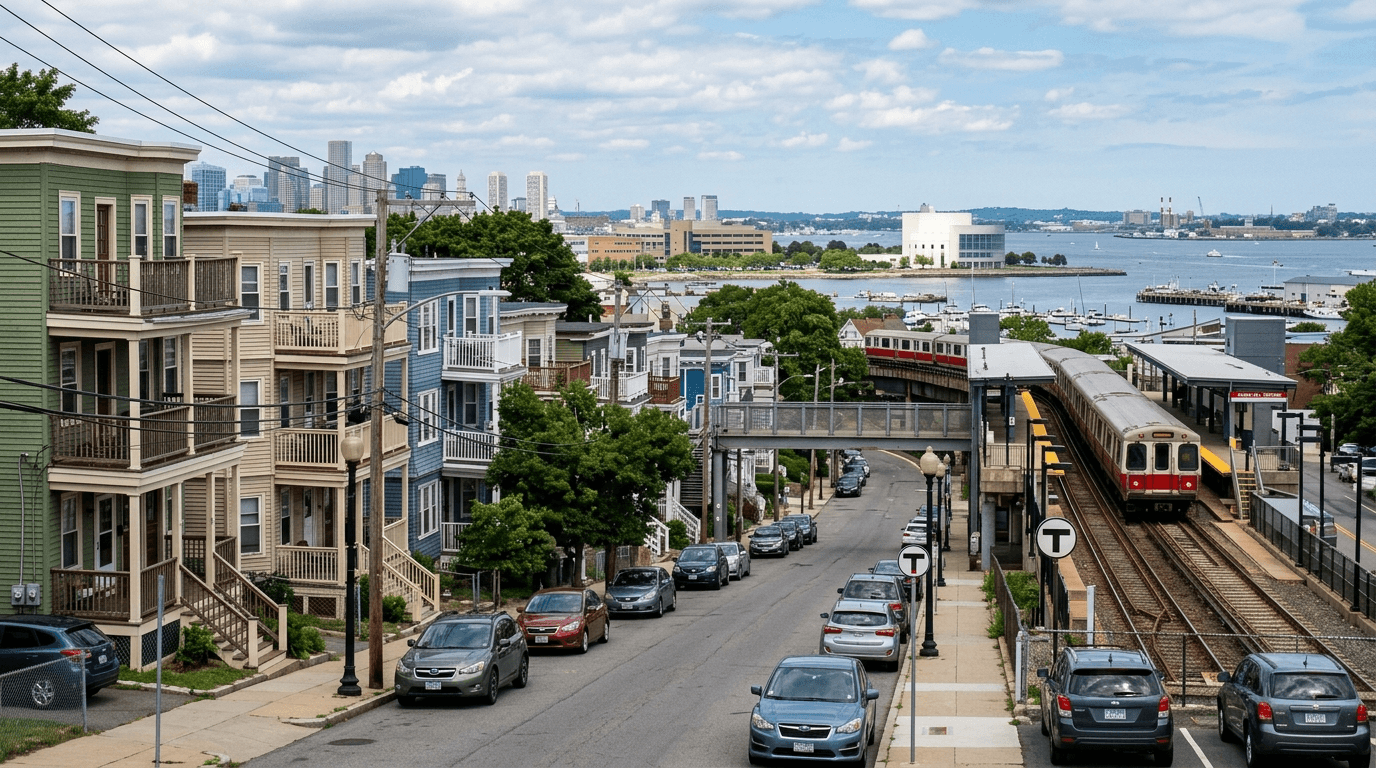
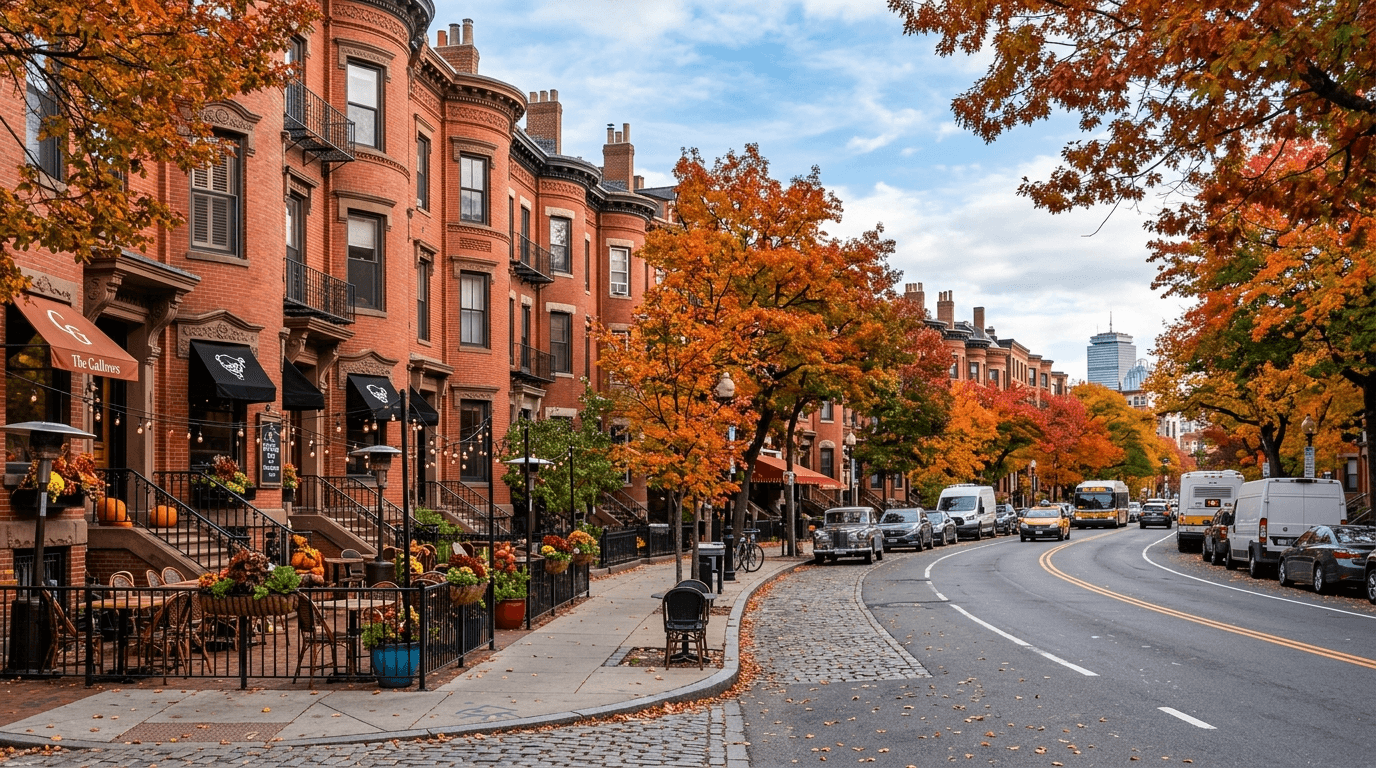
Calling Dorchester a neighborhood undersells it. It's a collection of villages, each with a distinct personality, its own price band, and usually its own T stop. It's the largest neighborhood in Boston by land area and by population. And for young professionals who've been quietly priced out of South Boston or the Seaport, it has become the most practical place in the city to build a real life — a Red Line commute under half an hour, a condo you can actually afford to buy, and a food scene that outclasses most of downtown.
Here's how the neighborhood really works.
What Is the Vibe Like in Dorchester — Quiet or Busy?
Dorchester is busy, but not in a downtown way. The pattern is consistent: active commercial corridors, then residential side streets. A loud, multicultural main drag can sit two blocks from a hilltop street of triple-deckers where nothing moves after 9 p.m. Which version you get depends entirely on the village you choose.
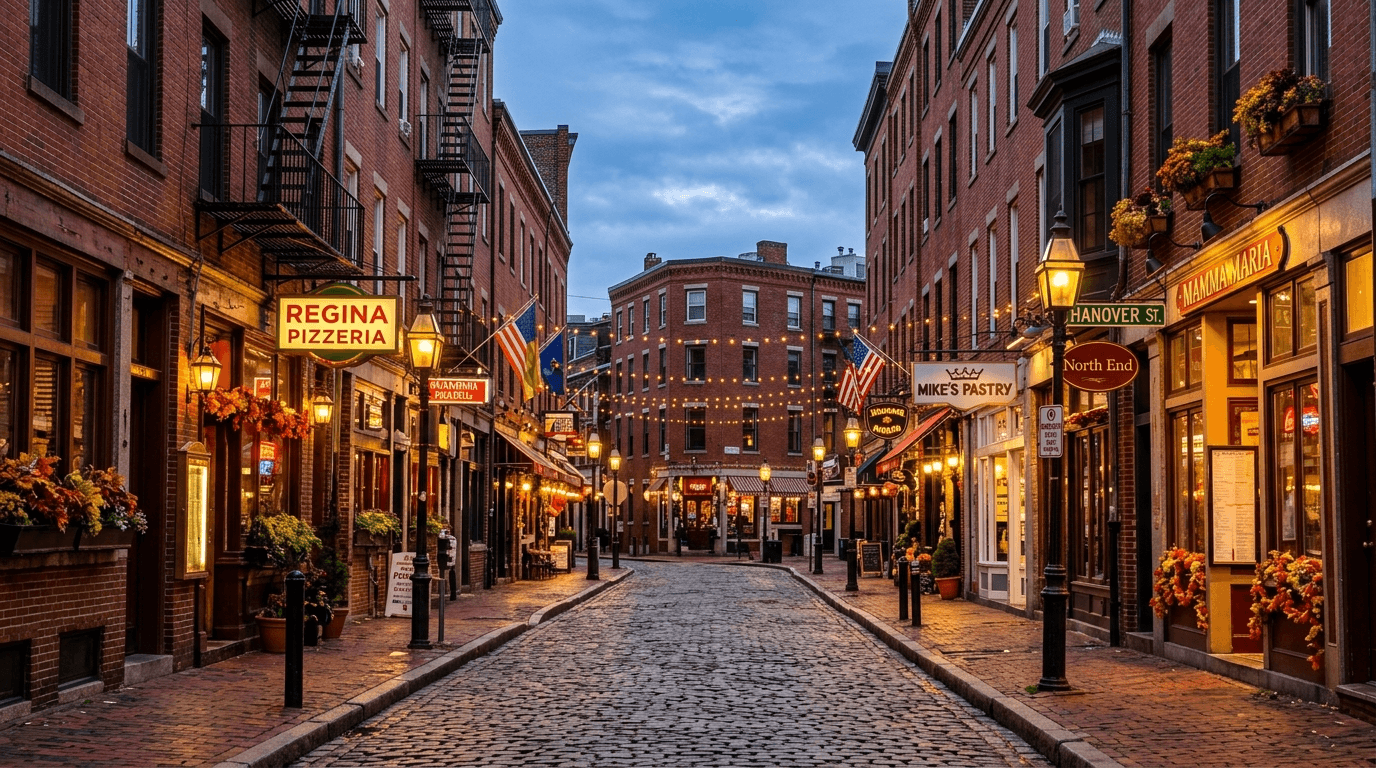
The energy is street-level, not skyline-level. Dorchester Avenue — "Dot Ave" to anyone who lives here — is the spine, running for miles past Vietnamese pho shops, Cape Verdean restaurants, Irish pubs that have stayed in the same family for decades, and newer coffee bars run by people who grew up three streets over.
A few things worth knowing before your first tour:
•The diversity isn't a marketing line. On a single walk down Dot Ave you'll hear Vietnamese, Haitian Creole, Cape Verdean Portuguese, and Spanish. That shows up on the plate, too — a Bánh Mì Chị Tôi sandwich for lunch and Cape Verde Taste for dinner is an ordinary Tuesday here.
•Nightlife is neighborhood-scale, not district-scale. Gastropubs, breweries, packed corner bars — not clubs. Lower Mills and Savin Hill carry most of the after-work weight.
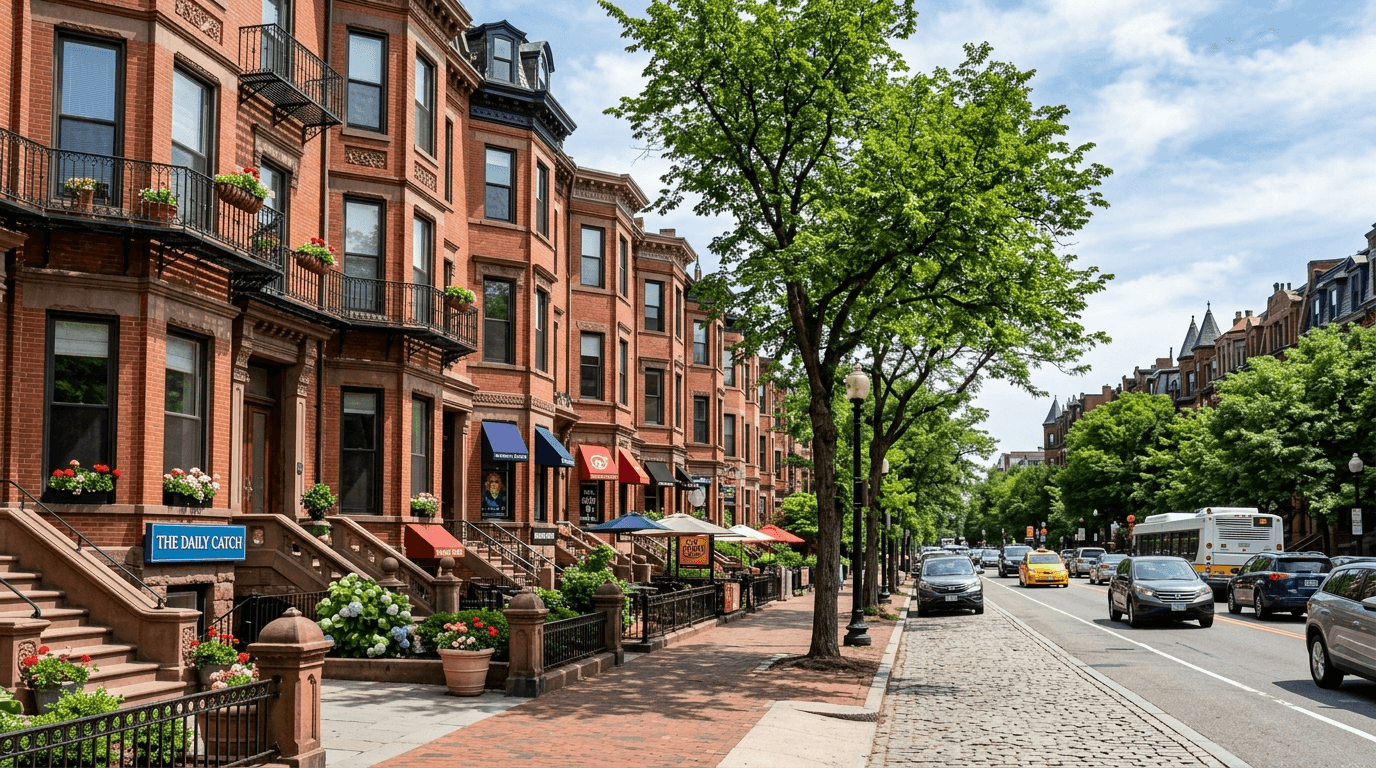
•People still know each other. Coffee shops like Chill on Park operate as informal community centers, which is rare in Back Bay.
The honest tradeoff: Dorchester is bigger and far less uniform than the compact neighborhoods young buyers tend to shop first. Character can shift within a block. That isn't a warning so much as the best reason to walk the specific streets you're considering instead of shopping by zip code.
What Are Condos and Townhomes Like in Dorchester?
Two products dominate the for-sale market: renovated units inside historic triple-deckers, and newer mid-rise condo buildings clustered near the Red Line. For young professionals, the triple-decker condo is the workhorse — and it's where the value sits.
Recent market reporting points to a competitive, fast-moving picture. Median sale prices are roughly flat to modestly higher year over year, sales volume is up sharply, homes are going under agreement in well under a month, and a large share close at or above asking.
Dorchester Market Snapshot: July 2026
Headline housing metrics for Dorchester, highlighting a competitive market with rising sales activity, fast median days on market, and sale prices slightly above list.
Read those numbers closely, because they tell a specific story: volume is expanding much faster than prices. That's a market pulling in new buyers, not one running out of momentum.
What Will You See Touring Dorchester Condos?
The converted triple-decker condo. Dorchester was built for these — narrow lots, three stacked flats, front and back porches. A renovated floor-through unit typically runs 900 to 1,300 square feet, with high ceilings, original moldings if the developer had taste, a private porch or deck, and often a deeded parking spot out back. Association fees in these small three-unit buildings usually land at the low end of the Boston range for basic services. No doorman, no elevator, no pool to fund.
New-construction mid-rises. Concentrated near Savin Hill, Fields Corner, and along the Dot Ave corridor. Elevators, in-unit laundry, garage parking, and increasingly, shared roof decks with genuinely good skyline views. Fees run higher, and in the most amenitized buildings they can be several times what you'd pay in a small triple-decker association.
Multi-level townhomes. The sweet spot if you want square footage and outdoor space. Two or three levels, a private patio or yard, off-street parking — the closest thing to a house without single-family pricing.
How Does Dorchester's Housing Mix Vary by Village?
Data Table
Village
What You'll Find
T Access
Savin Hill
Historic homes and modern condos, harbor views
Savin Hill (Red)
Fields Corner
Traditional triple-deckers, single-families
Fields Corner (Red)
Ashmont / Peabody Sq.
Single-families, modern condos, classic triples
Ashmont (Red)
St. Mark's
Single-families, smaller multi-families
Shawmut (Red)
Lower Mills
Preserved historic homes, new development
Ashmont / Mattapan Line
Jones Hill
Single-families and multi-families
Bus / JFK-UMass
Neponset / Port Norfolk
Single-families and condos, waterfront
Bus / commuter rail
Lots across most of Dorchester are classic Boston streetcar suburb: narrow, deep, tight to the neighbors. Expect modest yards rather than sprawl. The exceptions are the hill neighborhoods — Jones Hill and parts of Savin Hill — where Victorian-era single-families sit on noticeably more generous parcels.
Is House-Hacking Viable in Dorchester?
A meaningful share of Dorchester's inventory is still whole multi-family buildings, and triple-deckers here trade across a wide range depending on condition and village. That matters even to first-time buyers, because it explains where the condo supply comes from: developers buy those buildings, renovate, and convert. It also means house-hacking — buying a two- or three-family, living in one unit, renting the others — is genuinely workable here in a way it simply isn't in Back Bay or Charlestown.
Should You Rent or Buy in Dorchester?
Rent first if your timeline is under three years. Buy if you're staying put and can absorb the upfront cash. Rents here sit meaningfully below the neighborhoods young professionals typically shop first, which is exactly why so many people land in Dorchester and then decide to stay.
Median 1BR Rent in Young Professional Neighborhoods
A rent comparison across Boston neighborhoods popular with young professionals, showing Dorchester / Savin Hill as a comparatively value-oriented option below Seaport, South End, Back Bay, South Boston, and Fenway-Kenmore.
A rent comparison across Boston neighborhoods popular with young professionals, showing Dorchester / Savin Hill as a comparatively value-oriented option below Seaport, South End, Back Bay, South Boston, and Fenway-Kenmore.
A one-bedroom in the Savin Hill / 02125 area runs a median around $2,574. Compare that with $3,300 in South Boston, $3,350 in Back Bay, and $4,270 in Seaport. You're keeping roughly $700 to $1,700 a month for a commute that, from Savin Hill, takes about as long as one from Southie.
Broken out by unit size across the neighborhood:
Dorchester Median Rental Rates by Apartment Size
Monthly median rents in Dorchester by unit size, useful for young professionals weighing studio, one-bedroom, roommate, and larger shared-living options.
Monthly median rents in Dorchester by unit size, useful for young professionals weighing studio, one-bedroom, roommate, and larger shared-living options.
Worth reconciling those two figures. The $2,574 number is specific to the 02125 zip code and comes from the cross-neighborhood rent comparison; the $2,350 one-bedroom median is the neighborhood-wide Dorchester figure from a separate dataset. Savin Hill and the waterfront end of 02125 price above the Dorchester average, and that's the gap you're seeing.
On the buy side, Greater Boston market reporting puts the median condo price around $597,000 with 30-year mortgage rates near 6.37%. That works out to roughly $119,400 down at 20%, about $2,978 in monthly principal and interest, and closing costs somewhere between $11,940 and $29,850 — call it $131,000 to $149,000 in total cash to close.
Carrying costs: the City of Boston's published FY2026 residential tax rate is $12.40 per $1,000 of assessed value, or about $7,403 annually on a $597,000 property before the residential exemption. If you owner-occupy, the City values that exemption at up to $4,353.74. Real money, and a surprising number of first-time buyers never file for it.
Two points I raise constantly with young buyers:
1. The residential exemption materially changes the rent-versus-buy math. A monthly all-in cost near $3,795 drops to roughly $3,432 after the exemption on a median condo.
2. MassHousing's down payment assistance program offers up to $30,000 to eligible first-time buyers, per the agency's own program terms. Dorchester price points are precisely where that program does the most work.
Where Do People Actually Gather in Dorchester?
The social centers are the village squares — Savin Hill, Peabody Square in Ashmont, Fields Corner, and Lower Mills — plus a genuinely underrated network of parks and waterfront. There's no single "downtown Dorchester." That's the whole point.
Which Dorchester Squares Do People Actually Hang Out In?
Lower Mills is the most polished: a preserved historic mill district on the Neponset River with restaurants, a brewery scene, and walking trails. It pulls people in from outside Dorchester, which is always a useful barometer. Condos here have been moving fast — often faster than the Dorchester median.
Savin Hill is the young-professional epicenter. A compact commercial strip, an easy walk to the T, and Savin Hill Park with beach access and harbor views right there.
Fields Corner is the most energetic of the four — the heart of Boston's Vietnamese community and a legitimate dining destination. The Fields Corner branch library and Town Field anchor the civic side.
Peabody Square (Ashmont) is the quiet success story: a transit-oriented redevelopment around the station that produced a walkable cluster of restaurants and shops.
What Outdoor Space Does Dorchester Have?
This is where the neighborhood punches well above its reputation:
•The Neponset River Greenway — a paved waterfront trail connecting Lower Mills to Port Norfolk and out toward the harbor. The best running and cycling infrastructure in this part of the city.
•Franklin Park — 500 acres on Dorchester's western edge, home to the zoo, a golf course, and miles of trail.
•Savin Hill Park and Beach — real Boston Harbor access, ten minutes from a Red Line stop.
•Ronan Park — hilltop views that surprise people who've never made the climb.
Which Landmark Defines Dorchester's Waterfront?
The John F. Kennedy Presidential Library and Museum sits on Columbia Point beside UMass Boston, with one of the finest waterfront settings in the city. Columbia Point is also where Dorchester's future is being written.
Dorchester Bay City Project
A major waterfront transformation near JFK/UMass that reinforces Dorchester’s long-term urban growth story and appeal for transit-oriented young professionals.
The Dorchester Bay City project is a $5 billion, 36-acre waterfront transformation near JFK/UMass. Whatever you think of megaprojects, a build at that scale directly beside a Red Line station reshapes the long-term value story for everything within walking distance. When clients ask why Dorchester and why now, Columbia Point is a large part of the answer.
How Is the Commute from Dorchester to Downtown Boston?
Dorchester is among the best-connected neighborhoods in Boston: four Red Line stations and a downtown ride of roughly 20 minutes. It's the strongest single argument for buying here.
Which Red Line Stops Serve Dorchester?
North to south along the Ashmont branch:
Data Table
Station
Serves
Character
JFK/UMass
Columbia Point, Savin Hill north
Branch junction; Braintree + Ashmont trains
Savin Hill
Savin Hill village
Walkable village, beach access
Fields Corner
Fields Corner, Jones Hill
Busiest commercial hub
Shawmut
St. Mark's
Quietest, most residential
Ashmont
Ashmont, Peabody Sq., Lower Mills
Terminus; connects to Mattapan trolley
Here's the nuance most guides skip: JFK/UMass is where the Ashmont and Braintree branches split. North of that point, a train comes every few minutes. South of it — Savin Hill, Fields Corner, Shawmut, Ashmont — you're on Ashmont-branch headways only. In practice, a Savin Hill commute and an Ashmont commute feel meaningfully different at rush hour, even though the map suggests otherwise. If reliability matters more to you than price, weight the northern stations.
The service trend is encouraging:
Scheduled Weekday Trip Growth by MBTA Line
Transit service growth from Winter 2024–2025 to Winter 2025–2026, with the Red Line—central to Dorchester commuting—showing scheduled weekday trips increasing from 406 to 448.
Winter 2024-2025 Trips
Winter 2025-2026 Trips
Transit service growth from Winter 2024–2025 to Winter 2025–2026, with the Red Line—central to Dorchester commuting—showing scheduled weekday trips increasing from 406 to 448.
Scheduled weekday Red Line trips rose from 406 to 448 between Winter 2024–2025 and Winter 2025–2026 — a real increase on the line that matters most to this neighborhood, and a direct result of the slow-zone removal work.
What Else Connects Dorchester Besides the Red Line?
•Commuter rail serves Upham's Corner and the Four Corners/Geneva area on the Fairmount Line, the fastest route into South Station for parts of Dorchester the Red Line never reaches.
•Bus routes blanket the neighborhood — the 15, 16, 22, 23, and 26 among them — and they're essential for the inland villages.
•I-93 runs along the eastern edge with immediate on-ramps, putting you in the Seaport in minutes off-peak and giving you a clean shot toward the South Shore. Keep in mind that Boston drivers lose roughly 79 hours a year to congestion, though congestion did improve about 10% between 2023 and 2024.
What Should Dorchester Buyers Take From This?
Shop by station, not by village name. Walking distance to a Red Line stop is the most durable value driver in Dorchester, and the market has already priced that in. Over the past decade, roughly 50 transit-oriented development projects delivering about 10 million square feet and 5,000+ housing units have clustered around this neighborhood's rail stations. That isn't speculation. That's capital voting.
Is Dorchester a Good Fit for Young Professionals?
Yes — provided you do the street-level homework. You get Red Line access comparable to Southie, rents roughly $700–$1,700 a month cheaper than the neighborhoods you're likely comparing it against, entry condo pricing where a Boston salary actually works, and a food and community scene with more character than most of the city.
What you give up is uniformity. Dorchester is large, and quality of life varies block to block in a way it doesn't in Back Bay or Charlestown. The approach is straightforward: pick your station first, walk the surrounding streets at different times of day, and let that set your search radius.
Zoom out and the market context is a neighborhood with rising sales volume, homes moving quickly, and a large share selling at or above list. Competitive, yes — but competitive at price points that still make sense. That's exactly why so many young professionals arrive as renters and end up buying.
If you're weighing specific villages, the Savin Hill–versus–Ashmont decision is usually the crux. Savin Hill for the faster, more frequent commute and harbor proximity. Ashmont and Lower Mills for more space, more house, and a quieter street for the money. Both hold up. The mistake is choosing one without walking the other.
Is Dorchester, Boston, MA a good place for young professionals and families?
Dorchester can be a strong fit for young professionals and families who want Red Line access, more attainable housing options, and a neighborhood feel within Boston. It offers village-style commercial centers, residential side streets, parks, waterfront access, and a wide range of condos, townhomes, and single-family homes.
The key tradeoff is that Dorchester is large and varies block by block. Buyers should evaluate the specific village, station area, and surrounding streets rather than relying on the neighborhood name alone.
What types of condos and townhomes are common in Dorchester, Boston, MA?
Dorchester’s condo market is dominated by renovated units in historic triple-deckers and newer mid-rise condo buildings near the Red Line. Triple-decker condos often offer 900 to 1,300 square feet, high ceilings, porches or decks, and sometimes deeded rear parking.
Townhomes are also available, especially for buyers who want more space, multiple levels, private outdoor areas, and off-street parking without moving into a single-family home.
Are HOA fees in Dorchester, Boston, MA expensive?
HOA fees in Dorchester vary by building type. Small three-unit triple-decker associations typically have lower fees because they usually do not include elevators, doormen, pools, or extensive amenities.
Newer mid-rise buildings near Savin Hill, Fields Corner, and the Dot Ave corridor often have higher fees, especially when they include elevators, garage parking, in-unit laundry, roof decks, or other shared amenities.
How much does it cost to buy a condo in Dorchester, Boston, MA?
Recent Greater Boston market reporting places Dorchester’s median condo price around $597,000. With a 20% down payment, that equals about $119,400 down, plus estimated closing costs of roughly $11,940 to $29,850.
At a 30-year mortgage rate near 6.37%, monthly principal and interest would be about $2,978 before taxes, insurance, HOA fees, and other costs. Owner-occupants may also benefit from Boston’s residential exemption, valued at up to $4,353.74.
Is renting cheaper in Dorchester, Boston, MA than in South Boston or the Seaport?
Yes. A one-bedroom in the Savin Hill / 02125 area has a median rent around $2,574, compared with about $3,300 in South Boston, $3,350 in Back Bay, and $4,270 in the Seaport.
Across Dorchester overall, the neighborhood-wide one-bedroom median is about $2,350. Savin Hill and the waterfront end of 02125 tend to price above the broader Dorchester average.
How is the commute from Dorchester, Boston, MA to downtown Boston?
Dorchester is one of Boston’s best-connected neighborhoods, with Red Line service and a downtown ride of roughly 20 minutes from key stations. Major Red Line stops serving the neighborhood include JFK/UMass, Savin Hill, Fields Corner, Shawmut, and Ashmont.
JFK/UMass has access to both the Ashmont and Braintree branches, while stations south of JFK/UMass rely on Ashmont-branch service. For many buyers, walking distance to a Red Line station is one of the most important long-term value drivers in Dorchester.
What should families know about schools in Dorchester, Boston, MA?
Dorchester is not a single uniform neighborhood; it is a collection of villages with different housing patterns, transit access, and day-to-day feel. Families evaluating schools should pair that research with a close review of the specific village, block, and commute pattern.
Quality of life in Dorchester can change quickly from one street to another, so families should walk the area around any home at different times of day before deciding on a search radius.